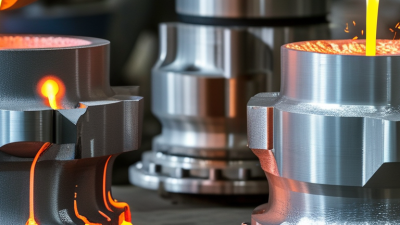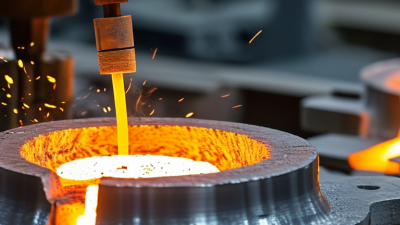
China’s stainless steel casting industry serves demanding sectors, including valves, pumps, food equipment, marine systems, and industrial machinery. This guide introduces ten manufacturers that deserve closer attention for their capabilities, production discipline, and export experience. The selection focuses on practical evidence, not impressive claims alone.
Each company is considered through several measurable areas. These include alloy options, casting methods, mold control, machining capacity, inspection equipment, and delivery consistency. A reliable supplier should explain its process clearly, from wax pattern preparation to heat treatment and final surface inspection. Material traceability also matters. Buyers should expect documented mill certificates, dimensional reports, and, where necessary, chemical analysis or non-destructive testing.
Small details often reveal manufacturing maturity. Look for clean casting surfaces, stable wall thickness, accurate threaded connections, and carefully protected parts inside export packaging. Factory audits, customer references, quality certifications, and responsive engineering support provide stronger evidence than website photographs. However, no ranking can fit every project. A manufacturer skilled in precision investment casting may not suit large structural components. Public information can also become outdated, and some supplier capabilities require direct verification.
This overview is designed as a practical starting point for procurement teams, engineers, and international buyers. It does not replace sample testing or a formal supplier audit. Request current quotations. Confirm production capacity. Compare total value, not only unit price, before choosing a Stainless Steel Casting partner in China.
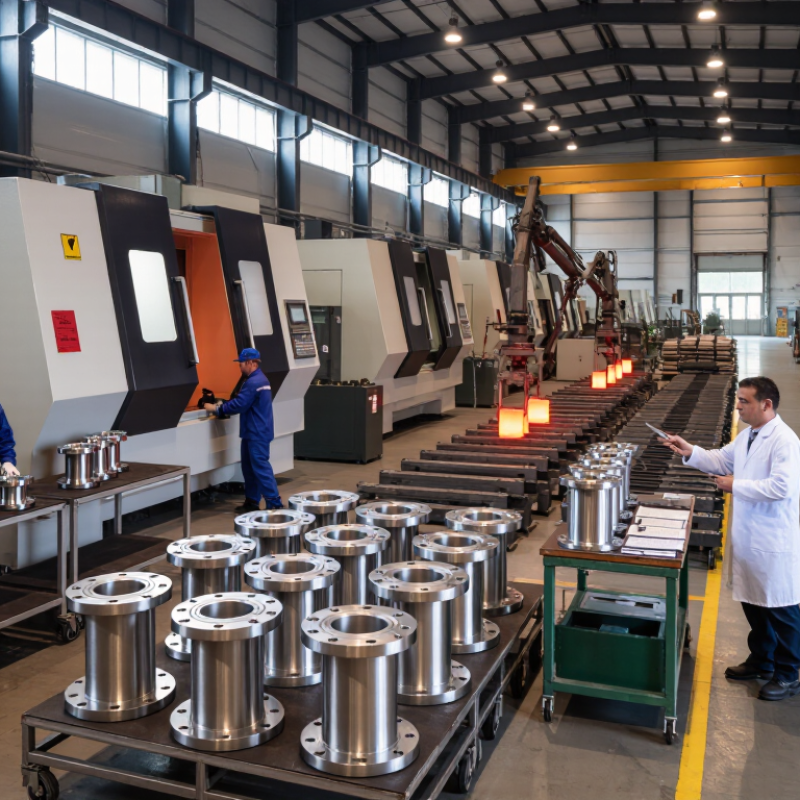
A leading stainless steel casting manufacturer in China is defined by process control, not production volume alone.
Experienced engineers review the drawing, alloy grade, wall thickness, and service temperature before quoting. They should explain shrinkage risks, gating choices, and machining allowances in practical terms. Clear communication matters.
The foundry must control melting, pouring, heat treatment, and surface finishing through documented procedures. Material certificates should identify the heat number and match each delivery batch. Independent testing can verify chemical composition, tensile strength, hardness, and corrosion resistance.
For critical parts, radiographic or dye penetrant inspection may reveal internal or surface defects. Small details matter. A reliable supplier also uses calibrated equipment, traceable inspection records, and dimensional reports based on approved drawings.
Auditable quality systems, such as ISO 9001, are useful, but certificates alone prove little. Technical competence must appear on the shop floor.
Site audits can reveal practical differences. Look for clean material storage, labeled castings, controlled furnace logs, and inspectors who understand tolerance limits. Prototype samples should be tested before large-volume production. No foundry is flawless.
Even skilled teams can face porosity, distortion, or delayed feedback. What matters is whether they disclose problems, investigate root causes, and prevent recurrence. A strong manufacturer shares realistic lead times and identifies design changes without overstating savings.
Records matter. Supplier reliability is built through repeatable results, honest reporting, and evidence from comparable casting work.
China Top 10 Stainless Steel Casting Manufacturers?
Selecting China’s top 10 stainless steel casting manufacturers requires more than checking factory size or online visibility. A reliable review examines casting experience, melting equipment, inspection capacity, and production consistency. Useful evidence includes furnace records, material certificates, dimensional reports, and documented corrective actions. Site audits can reveal practical details, such as clean storage areas, calibrated testing tools, and clear batch markings. Customer references also matter, especially when they confirm stable delivery and low defect rates.
Tips: Compare suppliers using the same checklist. Ask for sample inspection reports, alloy traceability, process controls, and photographs of finished castings. Check whether the factory explains rejection handling honestly. Vague answers are warning signs. Do not rely only on certificates.
A strong manufacturer should understand casting design, shrinkage risks, surface quality, and post-casting machining. The selection should also consider engineering support, communication accuracy, minimum order flexibility, and export experience. However, ranking the top 10 has limitations. Public information may be incomplete, and factory conditions can change after an audit. Even an experienced evaluator can misjudge capacity from a short visit. For this reason, trial orders and independent testing provide stronger evidence than promotional claims. The final list should reflect verified performance, not just reputation.
China’s stainless steel casting sector serves energy, transport, food processing, and industrial equipment markets. The China Foundry Association reported about 51.9 million tonnes of castings in 2023. The International Stainless Steel Forum recorded 58.4 million tonnes of global stainless steel production that year. These figures explain the sector’s manufacturing depth.
The ten leading manufacturers show different strengths. Profile one specializes in investment casting for complex parts. Profile two focuses on sand casting and heavy valves. Profile three produces corrosion-resistant pump bodies. Profile four serves marine equipment. Profile five emphasizes heat-resistant furnace components. Profile six supplies precision fittings for food processing. Profile seven develops duplex stainless steel castings. Profile eight handles large industrial housings. Profile nine combines machining with casting. Profile ten targets small-batch engineering orders. Their real differences appear in alloy control, mold design, inspection records, and delivery discipline. Not every factory performs equally well. That needs checking.
Tips: Request chemical analysis, tensile results, dimensional reports, and surface photographs. Verify whether testing is internal or independently certified. Ask for sample traceability from melt to shipment. A low quotation may hide weaker inspection or machining allowances. ASTM and ISO references help, but documents still require careful review.
The strongest supplier profile usually matches the buyer’s part geometry and operating temperature. Buyers should compare defect rates, not only production capacity. Site audits can reveal practical details, such as clean melt areas, calibrated gauges, and organized storage. Industry rankings remain useful, but they should not replace technical verification.
China Top 10 Stainless Steel Casting Manufacturers?
Key Casting Processes, Materials, and Industries Served
China’s leading stainless steel casting manufacturers use several production routes. Investment casting creates fine details for pump bodies, valve parts, and medical instruments. Sand casting suits larger housings and lower-volume industrial components. Centrifugal casting is useful for rings, sleeves, and corrosion-resistant tubes.
Material selection changes with service conditions. Grade 304 supports general food, architectural, and chemical applications. Grade 316 performs better where chlorides threaten pitting. Duplex stainless steel offers higher strength, but its heat treatment needs tighter control. Small chemistry errors can cause large failures.
The International Stainless Steel Forum reported global stainless steel production of about 58.4 million tonnes in 2023. The World Foundry Organization’s industry reviews place worldwide casting output above 100 million tonnes annually. These figures show the scale behind supplier comparisons, but volume alone proves little. Buyers should examine spectrometer records, radiographic testing, dimensional reports, and traceability systems. A clean surface may hide internal porosity. That is easy to miss.
Manufacturers serving oil and gas, marine engineering, power generation, food processing, and water treatment face different approval requirements. Practical audits should review mold design, pouring temperature, heat-treatment charts, and machining allowances. Technical judgment matters here. Cost remains important, yet an unstable process can erase an apparent saving through rework, leakage, or early replacement.
Capability-based comparison of representative stainless steel casting suppliers in China
| Profile | Primary Casting Processes | Common Stainless Steel Grades | Typical Part Weight | Typical Production Volume | Industries Served | Quality and Testing Capabilities |
|---|---|---|---|---|---|---|
| 01 | Investment casting; ceramic shell molding; CNC finishing | 304, 316, 316L, 17-4 PH | 0.01–50 kg | Small to medium batches | Food processing, pumps, valves, general machinery | Chemical analysis, dimensional inspection, pressure testing, visual inspection |
| 02 | Lost-wax casting; rapid prototyping; precision machining | 304L, 316L, 420, 430 | 0.02–35 kg | Prototype to medium volume | Medical equipment, instrumentation, automation, hardware | 3D measurement, radiographic testing, hardness testing, material traceability |
| 03 | Sand casting; resin sand molding; heat treatment | 304, 316, CF8, CF8M | 10–800 kg | Medium to large batches | Industrial pumps, chemical equipment, water treatment, power generation | Ultrasonic testing, radiographic testing, hydrostatic testing, metallography |
| 04 | Investment casting; vacuum melting; solution annealing | 17-4 PH, 15-5 PH, 13-8 Mo, 316L | 0.05–25 kg | Low to medium volume | Aerospace components, defense equipment, high-performance machinery | Spectrochemical analysis, penetrant testing, CT or radiographic inspection, tensile testing |
| 05 | Centrifugal casting; sand casting; machining and polishing | 304, 316L, 310S, 904L | 20–1,200 kg | Medium to high volume | Chemical processing, heat treatment, marine equipment, petrochemical systems | Ultrasonic testing, dimensional inspection, surface roughness testing, corrosion evaluation |
| 06 | Precision investment casting; CNC turning; electropolishing | 316L, 304L, 17-4 PH, 420 | 0.01–20 kg | Prototype to mass production | Sanitary equipment, laboratory instruments, semiconductor machinery | Surface roughness measurement, passivation verification, dimensional inspection, leak testing |
| 07 | Water-glass investment casting; shell molding; machining | 304, 316, 316L, 410 | 0.03–60 kg | Medium to high volume | Automotive systems, agricultural machinery, fluid-control equipment | Material certification, coordinate measurement, magnetic-particle testing, pressure testing |
| 08 | Sand casting; shell molding; welding repair and heat treatment | CF8M, CF3M, 304, 316 | 15–1,500 kg | Low to medium volume | Oil and gas, mining, water infrastructure, marine engineering | Radiographic testing, ultrasonic testing, hydrostatic testing, weld inspection |
| 09 | Investment casting; additive pattern production; five-axis machining | 316L, 17-4 PH, 15-5 PH, 2205 duplex | 0.02–40 kg | Prototype and customized batches | Robotics, industrial automation, energy equipment, specialized machinery | 3D scanning, dimensional reports, penetrant testing, mechanical-property testing |
| 10 | Precision casting; pressure-tight casting; passivation and polishing | 304L, 316L, CF8M, duplex stainless steel | 0.05–100 kg | Small to high volume | Pharmaceutical equipment, food and beverage, water systems, HVAC equipment | Leak testing, surface inspection, chemical composition testing, dimensional verification |
Note: The figures shown are typical capability ranges for stainless steel casting operations and may vary according to part geometry, alloy specification, tooling requirements, quality standards, and order quantity.
Choosing among China’s top stainless steel casting manufacturers requires more than comparing prices. The International Stainless Steel Forum reported global stainless crude steel production at about 58.4 million tonnes in 2023. That scale creates capacity, but it does not guarantee consistent casting quality. Ask each supplier for recent inspection records, heat numbers, material certificates, and dimensional reports. A serious factory should explain its melting, molding, heat-treatment, and finishing controls in clear language.
Start with your actual service conditions. Specify alloy grade, casting weight, wall thickness, tolerance, surface finish, and corrosion exposure. Then compare equipment and process evidence. Check furnace capacity, spectrometer testing, radiographic or dye-penetrant inspection, and corrective-action records. The ISO Survey 2023 recorded more than 1.2 million ISO 9001 certificates worldwide, yet certification alone cannot prove casting competence. Request a sample batch, not only a certificate. Review porosity, machining allowance, hardness variation, and delivery consistency.
Cost deserves careful questioning. A lower quotation may hide higher machining, scrap, packaging, or inspection expenses. Ask for a complete cost breakdown and a realistic production schedule. I would also audit communication during a trial order. Slow replies often become slower problem-solving later. Factory photos help, but live video checks and independent inspections provide stronger evidence. One weakness remains: many suppliers share excellent sample results but limited long-term data. That gap should influence your risk rating. Choose the supplier that proves repeatability, not merely the supplier with the lowest first offer.
A practical supplier-screening model based on the factors most relevant to stainless steel investment and sand casting: quality consistency, dimensional control, material traceability, production capability, lead time, communication, certifications, tooling support, price competitiveness, and export experience.
Use the weighted criteria as a first-stage comparison tool. Before placing an order, verify material certificates, inspection reports, sample quality, applicable standards such as ASTM A351 or ASTM A743, production capacity, tooling ownership, and delivery performance.