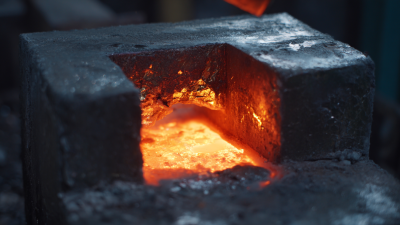
Choosing among the 2026 Top Stainless Steel Casting Manufacturers Worldwide requires more than comparing attractive websites. Real performance appears in foundry floors, inspection rooms, and delivered components.
This guide examines manufacturers through practical evidence: alloy control, pattern design, melting equipment, machining capacity, and quality documentation. It considers stainless grades such as 304, 316, duplex, and heat-resistant alloys. Each can behave differently during pouring, cooling, welding, and finishing. Experienced suppliers should explain these risks clearly. They should also provide traceable material certificates, dimensional reports, non-destructive testing records, and realistic production timelines.
Details matter.
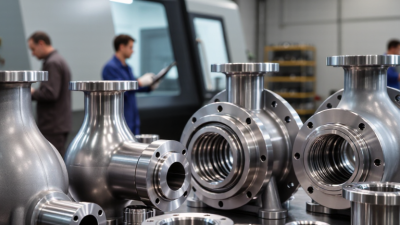
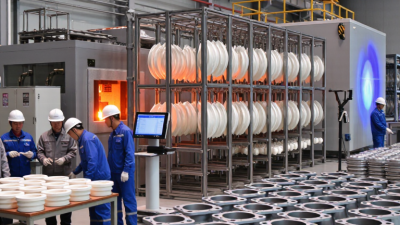
A reliable manufacturer may show how technicians remove ceramic shells, inspect gate areas, and measure a valve body before shipment. Those small steps often reveal more than polished marketing language. We also consider industries served, export experience, engineering support, minimum order quantities, and after-sales communication. Certifications can support credibility, but certificates alone cannot prove consistent casting quality. Their scope, validity, and relevance deserve careful checking.
This overview aims to help engineers, procurement teams, and project managers create a practical shortlist. Rankings remain difficult because manufacturing quality can change by facility, alloy, part geometry, and production batch. That limitation should not be ignored. Some public information may be incomplete, outdated, or supplied by the manufacturers themselves. Readers should request current samples, audit evidence, and technical clarification before making a final decision. Good sourcing is not only about price. It is about predictable metallurgy, honest communication, and components that perform under pressure, heat, corrosion, and time.
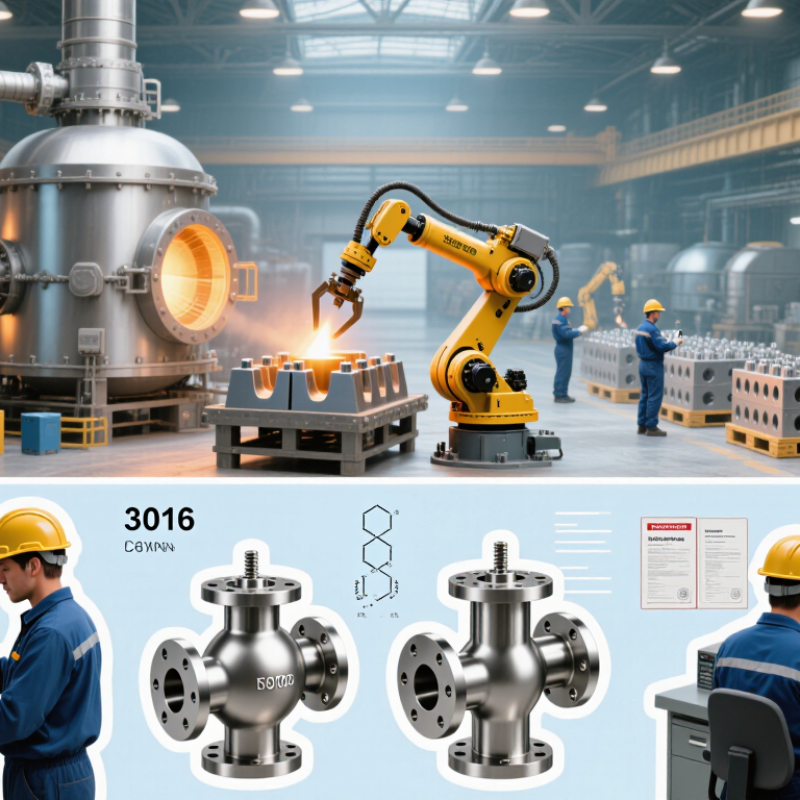
In 2026, stainless steel casting manufacturers are judged beyond catalog size or polished factory tours. Buyers examine repeatability, technical control, and evidence from real production. Numbers matter. A capable supplier should show dimensional reports, mechanical test results, and documented acceptance criteria for each casting family. Experience becomes visible through stable results, not confident promises.
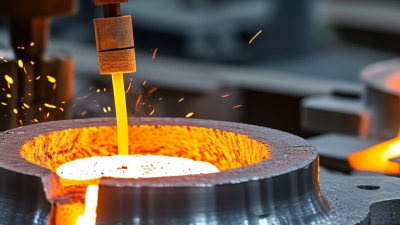
Evaluators inspect melting and pouring practices in detail. They review spectrometer readings, furnace calibration, mold temperature, and heat-treatment records. Every heat should connect to a material certificate and production batch. Non-destructive testing, including radiographic or penetrant inspection, must follow a clear procedure. Independent laboratories can strengthen credibility when customer requirements are demanding. Repair welding should be disclosed, recorded, and re-tested rather than hidden beneath a smooth surface.
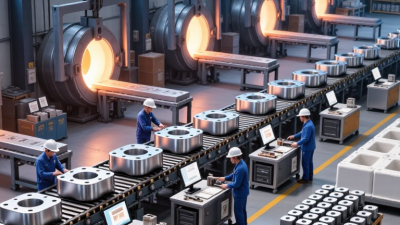
Digital traceability is increasingly important. A buyer may scan one casting and find its operator, alloy chemistry, inspection status, and shipment date. Useful systems reduce confusion, but software cannot correct careless measurements. A perfect audit is not enough. Evaluators should visit the shop floor, question technicians, and compare records with physical labels. Sustainability also requires evidence, such as energy data, recycled metal controls, and compliant wastewater handling. Delivery performance deserves scrutiny through missed-date records and corrective actions. Some manufacturers still overstate capacity during busy periods. That weakness matters. Reliable evaluation leaves room for doubt, follow-up testing, and uncomfortable questions.
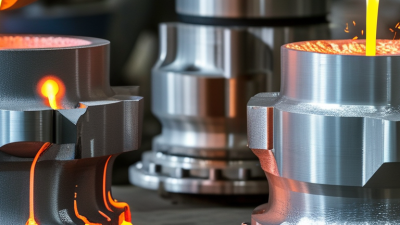
In 2026, stainless steel casting manufacturers are increasingly evaluated by region, not reputation alone. North American foundries often focus on energy, industrial machinery, and custom low-volume production. Their strengths include technical communication, documented inspections, and responsive engineering support. However, delivery costs can rise for overseas buyers.
European manufacturers commonly serve chemical processing, food equipment, pumps, and precision engineering. Many work with investment casting and advanced surface finishing. Buyers should examine material certificates, dimensional reports, and non-destructive testing records. Regional expertise is valuable, but quality can still vary between facilities. A polished website proves little.
Tips: Compare suppliers by casting method, alloy control, furnace capacity, and traceability. Request sample inspection reports. Ask how rejected parts are handled. Regional sourcing also deserves practical testing. A factory may meet specifications but struggle with your production schedule. Small pilot orders reveal more than promises.
Asian manufacturers often provide broad capacity, competitive pricing, and extensive experience with valve bodies, impellers, and complex industrial parts. Some facilities combine simulation software with automated molding and machining. Quality systems may be strong, yet buyers should verify audit dates and calibration records. In the Middle East, regional suppliers are developing around energy and infrastructure demand, though specialized stainless steel capacity may be narrower. I would not judge a manufacturer by geography alone. Process discipline matters more.
Stainless steel casting now combines metallurgical control with digital process monitoring. The International Stainless Steel Forum reported about 60.5 million tonnes of stainless crude steel production in 2023. This volume increases pressure on foundries to reduce defects, energy use, and material waste.
Electric induction furnaces provide accurate temperature control and cleaner melting conditions. Argon oxygen decarburization and vacuum oxygen decarburization help reduce carbon while preserving chromium content. During pouring, sensors track melt temperature, ladle timing, and mold filling.
Investment casting creates fine details for valves, pumps, and medical components. Sand casting remains practical for larger parts. Computer simulation predicts shrinkage, turbulence, and trapped gas before metal reaches the mold.
Inspection is becoming more layered. Coordinate measuring machines verify dimensions, while radiographic or computed tomography testing reveals internal porosity. ASTM testing guidance supports repeatable chemical and mechanical checks. Yet technology does not remove every risk. A model may miss local heat loss near a thin wall, and a clean surface can hide subsurface cracking. Experienced technicians still compare simulation results with cut-section evidence. That step is slower, but often more honest.
3D-printed sand molds can shorten development cycles and reduce tooling changes. However, they may require tighter moisture and dimensional control. Industry reports increasingly connect digital traceability with consistent casting quality, but implementation differs between facilities. The strongest manufacturers combine automated records with practical shop-floor judgment.
Top stainless steel casting manufacturers in 2026 serve demanding industries, not just general metal markets. The International Stainless Steel Forum reported 58.4 million tonnes of global stainless steel production in 2023. That scale supports continuing demand for corrosion-resistant cast components.
Energy and chemical plants rely on cast valve bodies, pump casings, impellers, and pressure fittings. These parts face heat, chlorides, acids, and repeated pressure cycles.
Food processing uses sanitary castings with smooth surfaces and controlled weld repair. Marine operators need propeller hubs, seawater pump parts, and fittings that resist pitting.
Medical equipment requires clean, traceable components with tight dimensional control. According to the International Energy Agency, global clean-energy investment is expected to exceed 2 trillion dollars in 2024. This expansion increases demand for stainless castings in hydrogen systems, power equipment, and water treatment.
Aerospace and transportation applications require stronger process discipline. Manufacturers commonly follow ASTM, ISO 9001, and sector-specific inspection procedures. Radiographic testing can reveal shrinkage, gas pores, and incomplete filling before installation.
However, rankings are not always straightforward. A large foundry may offer capacity but weaker technical support. A smaller supplier may control complex prototypes better.
Scrap rates, melt traceability, machining accuracy, and delivery consistency deserve equal attention. Published data also varies between reports, so buyers should verify production figures directly. That step is often overlooked.
How to Select the Right Stainless Steel Casting Manufacturer
Selecting a stainless steel casting manufacturer requires more than comparing unit prices. World Stainless reported 58.4 million tonnes of stainless crude steel production in 2023. This scale increases material availability, but it does not guarantee casting consistency. Ask for melt records, chemical analysis, heat-treatment charts, and recent inspection samples.
Review the supplier against your actual service conditions. ASTM A351 or ASTM A743 compliance may suit different pressure, corrosion, and temperature requirements. Request dimensional reports using calibrated equipment. Check radiographic or ultrasonic testing procedures when internal defects could cause failure. A certificate is not proof by itself. ISO’s 2022 Survey recorded over 1.2 million ISO 9001 certificates worldwide, yet certification alone cannot reveal weak process control.
Visit the foundry if possible. Look for clean furnace areas, labeled charge materials, controlled pouring temperatures, and traceable heat numbers. Ask how rejected castings are analyzed, not merely removed. The answer often exposes real experience. A low quotation can hide expensive machining, repair welding, or delayed tooling. I would also test one pilot batch before signing a large contract. This step feels slower. It is usually cheaper than discovering shrinkage defects after installation. Review communication speed, engineering support, packaging, and export documentation. These practical details are easy to overlook, and they frequently determine whether production remains stable.
| Selection Dimension | Industry-Relevant Data or Benchmark | What to Evaluate | Recommended Verification Documents | Priority |
|---|---|---|---|---|
| Material capability | Common cast stainless grades include CF8, CF8M, CF3 and CF3M under ASTM A351; CF8 is commonly associated with cast 304 stainless steel, while CF8M is commonly associated with cast 316 stainless steel. | Confirm the manufacturer can produce the required grade, chemistry, heat treatment and mechanical properties for the intended service. | Material test certificate, heat number traceability, chemical analysis and mechanical test results. | Critical |
| Applicable material standard | ASTM A351 covers austenitic steel castings for pressure-containing components; ASTM A743 covers corrosion-resistant iron-chromium and iron-chromium-nickel alloy castings for general applications; EN 10283 covers corrosion-resistant steel castings. | Check whether the supplier routinely works to the standard specified in the drawing, purchase order or end-use regulation. | Approved material specification, purchase-order review record and sample inspection certificate. | Critical |
| Casting process | Investment casting is suitable for complex, near-net-shape components; sand casting is commonly used for larger or less geometrically detailed castings; shell molds can provide improved surface detail compared with conventional green-sand methods. | Match the process to part size, geometry, wall thickness, annual volume, surface requirements and allowable machining allowance. | Process flow chart, tooling proposal, casting simulation summary and representative sample parts. | High |
| Dimensional accuracy | ISO 8062-3 defines dimensional and geometrical tolerances for castings using CT tolerance grades. The achievable grade depends on the alloy, casting process, part geometry and foundry controls. | Verify that the proposed tolerance level is realistic before removing machining stock or finalizing tooling. | Capability study, first-article inspection report, CMM report and approved drawing with tolerance zones. | High |
| Surface finish | As-cast surface roughness varies with the mold material and casting method. Final roughness requirements should be specified separately for as-cast, machined, ground or polished surfaces. | Assess visual quality, pits, laps, cold shuts, veins, weld repairs and the transition between cast and machined areas. | Surface-finish standard, visual inspection criteria, roughness measurements and approved limit samples. | High |
| Heat treatment | Solution annealing is widely specified for many austenitic stainless steel castings to restore corrosion resistance and obtain the required metallurgical condition. | Review furnace uniformity, temperature records, quenching practice and the relationship between treatment parameters and the specified grade. | Heat-treatment chart, furnace calibration certificate, batch record and metallographic or hardness results where applicable. | Critical |
| Non-destructive testing | Liquid penetrant testing is suitable for detecting surface-breaking discontinuities in nonporous materials; magnetic-particle testing is applicable only to ferromagnetic materials; radiography is used to examine internal casting discontinuities. | Select the method according to the alloy and defect risk. Austenitic stainless steel is generally nonmagnetic, so liquid penetrant or radiographic testing may be more appropriate than magnetic-particle testing. | NDT procedure, operator qualification, inspection report, acceptance criteria and radiographic or penetrant images when required. | Critical |
| Welding and repair control | Casting repair by welding can affect corrosion resistance, fatigue performance and pressure integrity. Repair limits and approval requirements should be defined before production. | Determine whether weld repairs are permitted, how they are recorded and whether repaired areas receive repeat heat treatment or NDT. | Weld repair procedure, qualified welding personnel records, repair map and post-repair inspection report. | Critical |
| Machining capability | Integrated CNC machining can reduce handling and improve control of datum relationships, but final capability depends on machine condition, workholding, tooling and inspection methods. | Compare in-house and subcontracted operations, machining tolerances, datum control, tool management and capacity for repeat production. | Machine list, process capability data, inspection plan and dimensional inspection reports. | High |
| Quality management system | ISO 9001 specifies requirements for a quality management system; certification supports process control but does not by itself guarantee that every casting meets a particular technical requirement. | Check certification scope, certificate validity, internal audit practice, corrective-action performance and control of externally provided processes. | Valid certificate from an accredited certification body, audit summary and corrective-action records. | High |
| Traceability | Reliable traceability links the finished casting to its heat, raw materials, molding batch, heat treatment, inspection results and shipment records. | Require permanent or controlled identification that remains associated with the part throughout casting, machining, inspection and packaging. | Heat-number log, traveler, barcode or marking procedure, material certificate and final release record. | Critical |
| Production scale and lead time | Lead time is affected by tooling design, pattern production, casting trials, heat treatment, machining, inspection, rework and logistics; it cannot be judged from melting capacity alone. | Evaluate prototype, low-volume and repeat-production capacity separately, including contingency plans for furnace, tooling or equipment downtime. | Capacity plan, quoted milestone schedule, historical on-time-delivery data and production recovery plan. | High |
| Cost structure | Total cost includes tooling, pattern maintenance, metal yield, melting, heat treatment, machining, NDT, packaging, freight, duties and potential quality-related rework. | Compare total landed cost rather than piece price alone, and clarify which inspection, tooling and engineering services are included. | Itemized quotation, tooling ownership terms, payment schedule, freight assumptions and warranty conditions. | High |
| Export and compliance support | International orders may require certificates of origin, export documentation, material certificates, packing declarations and destination-specific regulatory records. | Confirm the supplier understands the documentation, labeling, packaging and delivery requirements of the destination market. | Sample export document pack, packaging specification, shipping history and regulatory compliance statement. | Medium |
| Environmental and safety controls | ISO 14001 provides a framework for environmental management systems; foundry-specific risks include energy consumption, dust, fumes, slag, wastewater and process chemicals. | Review legal compliance, emission controls, waste handling, worker safety and the use of recycled stainless steel scrap within approved material controls. | Environmental certificate where applicable, permits, waste-management records and safety audit documentation. | Medium |