Leave Your Message

China Top 10 Silica Sol Precision Casting Manufacturers

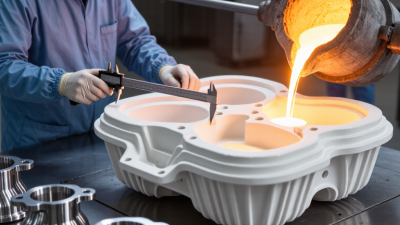
Silica Sol Precision Casting is valued for producing intricate metal parts with fine surface detail and limited machining. In practice, the result depends on more than the ceramic shell. Wax pattern control, slurry stability, firing, alloy selection, and inspection all matter. A thin valve body can reveal defects that a broad test coupon hides. Details count.

Grand View Research’s Investment Casting Market Size, Share & Trends Analysis Report (2024–2030) projects a 5.7% compound annual growth rate for the global investment casting market over that period. This signals sustained demand, not guaranteed success for every foundry. China’s manufacturers serve sectors including automotive, pumps, industrial machinery, and energy equipment, where repeatability and delivery discipline are closely scrutinized. This “China Top 10” overview should therefore be read as a practical shortlist, not a universal ranking. Company scale, alloy range, export experience, certifications, and documented quality systems can help buyers compare suppliers. Yet a polished brochure proves little. Request sample parts, process records, and clear inspection criteria before drawing conclusions. Even those checks have limits; supplier performance can vary by part complexity and production lot. A useful comparison starts with evidence, then leaves room for questions.
China Top 10 Silica Sol Precision Casting Manufacturers

How the Top 10 China Silica Sol Casting Manufacturers Are Selected: 5 Criteria

Selecting China’s top 10 silica sol precision casting manufacturers requires more than comparing prices. Five criteria offer a practical screen. First, check process capability: can the factory show shell-making controls, casting capacity, and experience with your alloy and part size? Second, examine quality evidence, including inspection plans, dimensional reports, and traceable batch records. Ask to see a recent sample report, not only a polished capability sheet.

Third, assess material control, such as incoming alloy verification and documented melting practices. Fourth, compare delivery reliability using recent on-time shipment records and clear capacity information. Fifth, review engineering support: a capable team should discuss draft, wall thickness, tolerances, and likely casting risks before production. The World Foundry Organization’s 2022 Global Casting Production Census estimated worldwide casting output at about 109.6 million metric tons. This covers all casting processes, not silica sol casting alone, so it provides industry context rather than a direct supplier ranking. A weakness in any checklist is that paperwork can look stronger than daily shop-floor control.

Tips: Request a trial part and inspect its surface, dimensions, and documentation together. Keep the drawing revision consistent. A quick video tour helps, but it is not an audit.
How Silica Sol Investment Casting Works: 8 Stages from Wax to Finished Part

China Top 10 Silica Sol Precision Casting Manufacturers

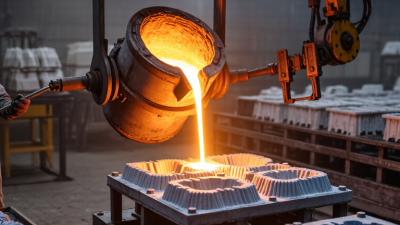
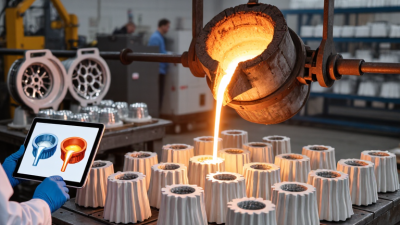
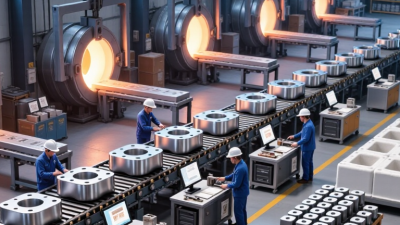
Silica sol investment casting turns a detailed wax pattern into a precise metal part through eight controlled stages. Stage one forms the wax pattern, often by injecting wax into a prepared die. In stage two, workers attach patterns to a central wax runner, creating a casting tree. Stage three builds the ceramic shell: the tree is dipped in silica sol slurry, coated with fine refractory material, and dried repeatedly. Even a small dust particle can affect the surface. Stage four removes the wax, typically with steam under pressure, leaving a hollow ceramic mold.

Stage five fires and preheats the shell to strengthen it and reduce thermal shock. During stage six, molten alloy is poured into the cavity. Pouring temperature and mold condition both influence filling and surface quality. Stage seven allows the casting to cool before workers break away the shell. Stage eight separates parts from the runner, then removes gates, finishes surfaces, and inspects dimensions and defects. Small details matter. In practice, the sequence looks tidy on paper; shell drying and wax variation can make production less predictable.

Tips: Check shell thickness and drying conditions between coats. Confirm wax dimensions before assembly, and inspect the finished part against the drawing. Record process settings, but review them when defects recur. A written procedure helps; it does not replace careful observation.

China Top 10 Silica Sol Precision Casting Manufacturers - How Silica Sol Investment Casting Works: 8 Stages from Wax to Finished Part

The table below summarizes the eight main stages of silica sol investment casting. Process settings vary with alloy, part geometry, shell system, and foundry practice; the figures shown are representative industry ranges, not universal specifications.

Stage Process Typical practice or data Main quality checks Stage outcome
1. Wax pattern production Wax is injected into a metal die to create a pattern matching the intended casting geometry. Injection pressure, wax temperature, and cooling time are set for the wax formulation and pattern design. Inspect dimensions, surface condition, distortion, and visible fill defects. A wax replica ready for assembly.
2. Tree assembly Wax patterns are attached to a central wax sprue, forming a tree that provides the metal flow path. Runner and gate layout is designed around casting size, alloy, and feeding requirements. Check joint strength, pattern spacing, and access for shell coating. An assembled wax tree.
3. Ceramic shell building The tree is dipped in silica sol-based ceramic slurry, coated with refractory stucco, and dried between coats. Multiple coats are applied; around 5–8 layers is a common range, adjusted for part size and shell requirements. Monitor slurry condition, coating coverage, drainage, drying conditions, and shell build-up. A rigid ceramic shell surrounding the wax tree.
4. Dewaxing The shell is heated, commonly in a steam autoclave, to remove the wax pattern. Autoclave steam conditions are equipment- and shell-dependent; saturated steam is commonly used to melt and evacuate the wax rapidly. Check wax removal, shell integrity, and the condition of the mold cavity. A hollow ceramic mold.
5. Shell firing and preheating The shell is fired to remove residual wax and moisture, develop strength, and prepare the mold for pouring. Firing and mold preheat temperatures are selected for the shell system and casting alloy; they are controlled using a defined furnace cycle. Verify furnace temperature uniformity, cycle completion, and shell condition before pouring. A clean, fired, preheated mold.
6. Metal melting and pouring The selected alloy is melted, prepared, and poured into the hot ceramic mold. Pouring temperature and melt treatment depend on alloy composition, casting geometry, and applicable process specifications. Control melt chemistry, temperature, cleanliness, and pouring practice. Metal fills the mold cavity and solidifies into the casting tree.
7. Shell removal and cutoff After solidification and cooling, the ceramic shell is removed and individual castings are cut from the sprue. Knockout and cutoff methods are chosen to avoid damaging the casting or affecting critical surfaces. Inspect for visible cracks, incomplete filling, and damage at gate locations. Individual castings separated from the tree.
8. Finishing and inspection Castings are gate-ground, cleaned, and inspected; heat treatment or machining is performed when specified. Inspection methods may include dimensional measurement, visual examination, and non-destructive testing appropriate to the part and specification. Confirm drawing requirements, material requirements, surface condition, and agreed acceptance criteria. A finished casting ready for delivery or the next manufacturing operation.

Which Quality Benchmarks Matter? ISO 8062-3 CT4–CT6 and Surface Roughness

When comparing China’s top silica sol precision casting manufacturers, treat ISO 8062-3 CT4–CT6 as a starting point, not a blanket quality promise. CT4 generally specifies tighter dimensional tolerances than CT6, but the permitted deviation depends on the nominal dimension and applicable tolerance range. Geometry matters, too. A thin rib and a broad flange may not behave alike during solidification.

Ask for inspection results tied to the drawing, including the measured dimensions, tolerance class, and inspection method. Check critical features such as bore diameter, mounting faces, and wall thickness rather than relying on a single “pass” statement. For repeat orders, compare sample reports with production-part data. This takes time. It can also reveal whether a supplier’s quoted capability reflects actual castings or only selected samples.

Surface roughness is a separate benchmark; CT grades do not define it. Specify Ra or another agreed roughness parameter, the unit, measurement location, and whether the surface is as-cast, blasted, or finished. A smooth test coupon may not represent a narrow passage or recessed area. Ra alone can also hide local pits or waviness, so define visual limits where appearance or sealing matters. Be precise, but realistic: complex surfaces can make repeatable measurement difficult.

China’s Top 10 Manufacturers Compared by Alloys, Capacity, Certifications, and Markets

A useful comparison of China’s ten leading silica-sol precision casting manufacturers should start with evidence, not brochure claims. The World Foundry Organization’s 56th Census reported about 109.5 million tonnes of global castings in 2022, with China producing roughly 51.5 million tonnes. These figures cover foundries broadly, not silica-sol investment casting alone. They show scale, but not a plant’s usable capacity. Ask for annual shipped tonnage, furnace loads, typical lead times, and recent production records.

Compare alloy range against actual applications: stainless and carbon steels, heat-resistant alloys, and customer-specified grades. Check whether samples and batch records support each claim. Certification needs similar care. The ISO Survey tracks certificates by standard and country; an ISO 9001 certificate does not, by itself, prove casting quality or process control. Verify its scope and expiry, then review inspection methods, traceability, and nonconformance handling. Details matter.

Markets reveal another difference. Export experience may bring stronger documentation, while domestic supply can offer shorter logistics. Neither guarantees fit. Compare the ten manufacturers using the same alloy, tolerance, order-volume, and delivery criteria, then request a sample inspection report. Rankings can mislead. Public data rarely separates silica-sol capacity from other casting methods, so a precise league table needs supplier-level verification. That limitation is easy to overlook.

Where Are Silica Sol Castings Used? 5 Key Sectors and Component Needs

Silica sol precision casting is useful where shape, surface finish, and dimensional control matter more than high-volume simplicity. In aerospace, thin-walled brackets, impellers, and hot-section components can demand complex passages and heat-resistant alloys. The International Energy Agency reported nearly 14 million electric cars sold worldwide in 2023, about 18% of all car sales. That shift increases demand for compact drivetrain and thermal-management parts, though not every part benefits from investment casting.

Industrial equipment is another major use. Pump impellers, valve bodies, and compressor components often face pressure, vibration, and corrosive fluids. A smooth internal surface can help, but casting quality still depends on alloy choice and process control. Small defects matter. In energy systems, precision-cast parts serve turbines, flow-control assemblies, and equipment used in expanding renewable-power infrastructure. The IEA reported that global renewable capacity additions reached about 510 GW in 2023, a record increase.

Medical and food-processing equipment also use corrosion-resistant cast components, including instrument housings, fittings, and compact fluid-handling parts. These applications need cleanable surfaces and reliable dimensions; “medical-grade” should never be assumed without material and validation records. Grand View Research estimated the global investment-casting market at about US$17.3 billion in 2023, reflecting broad demand across end-use industries. Still, market totals do not prove that silica sol is right for a specific component. Sample parts, tolerances, and inspection plans should guide that choice.