Leave Your Message

Why Choose Precision Investment Casting for Global Sourcing?

Global sourcing often demands more than a low purchase price. It requires repeatable quality, clear documentation, and predictable delivery. Precision Investment Casting addresses these needs by producing complex metal parts with tight dimensional control. Wax patterns can capture thin walls, internal passages, and curved surfaces that machining may struggle to create. The result is often less material waste and fewer secondary operations.

Professor John Campbell, a leading authority on casting technology, stated, “The quality of a casting is determined by the quality of the liquid metal.” His observation remains practical for international procurement. A capable foundry should control melting temperatures, alloy certificates, ceramic shell quality, and inspection records. Buyers should also review sample parts, dimensional reports, and nonconformance procedures before approving regular production. Small details matter. A rough surface or blocked passage can delay an entire assembly line.

Precision Investment Casting also supports flexible global supply strategies. One qualified supplier may serve several markets with consistent tooling and process controls. Digital drawings, 3D scans, and batch traceability can reduce communication gaps across time zones. However, the method is not automatically risk-free. Tooling changes may affect schedules, and poor wax handling can create hidden casting defects. Assumptions can fail.

A responsible sourcing decision therefore compares total value, not only unit cost. Freight, inspection, tooling life, rejection rates, and technical support deserve equal attention. When engineering discipline meets transparent supplier communication, Precision Investment Casting becomes a dependable option for demanding global production. Yet every claim should be verified through evidence, not promises.
Why Choose Precision Investment Casting for Global Sourcing?

What Is Precision Investment Casting?

Precision investment casting is a wax-based process for producing complex metal parts with fine details. A manufacturer first creates a wax pattern, then coats it with ceramic slurry. After drying, the wax melts away, leaving a hollow mold. Molten alloy fills that cavity. The ceramic shell breaks after cooling. This route supports thin walls, internal passages, sharp profiles, and near-net-shape production. Less machining can mean less material waste, although the result depends heavily on shell control and temperature discipline.

Fortune Business Insights reported that the broader investment-casting market reached about USD 17.3 billion in 2023. Its report also identifies aerospace, automotive, and industrial equipment as important demand sectors. That data supports global sourcing interest, but market size alone proves little. Buyers still need traceable heat records, dimensional inspection, and repeatable process capability. In practical sourcing work, a beautiful first sample can hide inconsistent wax shrinkage. That weakness deserves attention.

Tips: Ask for the casting alloy standard, process-flow chart, inspection plan, and sample measurement report. Confirm critical tolerances before requesting quotations. ASTM standards can help define material and testing expectations. Digital scanning is useful for complex geometry, but it should not replace calibrated gauges. Investment casting is precise, not flawless. Thin sections may distort, and ceramic shells can crack. A thoughtful supplier discusses these risks openly instead of promising perfection.
How the Precision Investment Casting Process Works

Precision investment casting begins with a detailed wax pattern. Engineers create it from approved drawings or three-dimensional models. The pattern must capture thin walls, sharp edges, and internal features accurately.

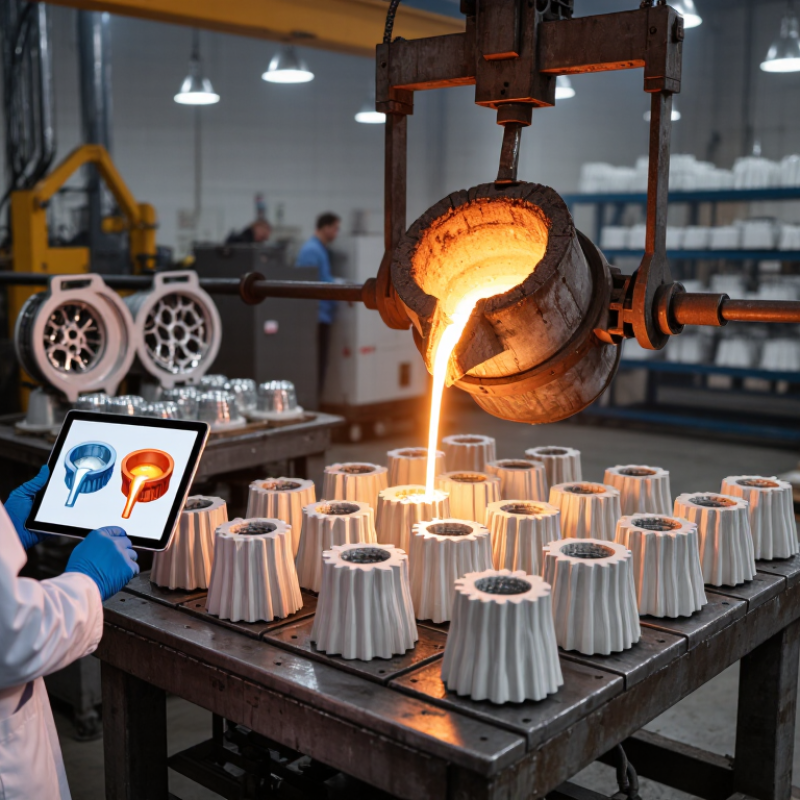
Several wax patterns join a central runner, forming a casting tree. Workers dip this assembly into ceramic slurry and coat it with fine sand. Each layer dries before the next one is added. More layers build a hard shell around the wax. This stage needs patience. Moisture or uneven coating can weaken the shell.

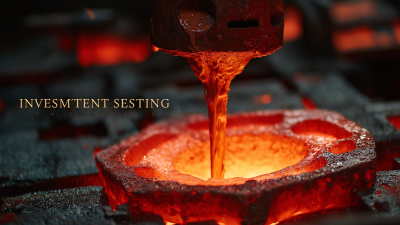
The dried shell enters a heated chamber, where the wax melts away. The remaining cavity becomes the final mold. Molten metal then fills the cavity under controlled temperature and pouring conditions. After cooling, workers break away the ceramic shell and cut each part from the tree. Grinding, heat treatment, machining, and surface finishing may follow. Inspectors check dimensions, surface quality, and material properties using measured samples and documented procedures. The process is precise, not magical. Small defects still happen. A slight wax distortion can affect several finished parts, so experienced teams review tooling, shell thickness, and inspection results before approving global production.

Why Precision Casting Supports Global Sourcing

Precision investment casting supports global sourcing by combining complex geometry with repeatable production. It can produce thin walls, internal passages, and near-net-shape components with less machining. This matters when suppliers operate across different regions and cost structures. According to UNCTAD’s Review of Maritime Transport 2023, over 80% of international trade by volume moves by sea. Small specification errors can therefore become expensive during long-distance logistics.

A reliable casting program begins with shared technical evidence. Suppliers should review alloy standards, dimensional tolerances, surface requirements, and inspection methods before quoting. ASTM standards can help align material and testing expectations across countries. Digital inspection reports, heat-lot records, and sample approvals also strengthen traceability. The World Bank’s Logistics Performance Index 2023 evaluated 139 economies, showing how customs, infrastructure, and shipment reliability vary between sourcing locations. Precision casting does not remove these differences, but it can reduce manufacturing variation.

Real projects still need honest review. A drawing can be incomplete. Tooling assumptions may be wrong. Experienced teams use first-article inspection, process capability studies, and controlled revisions before scaling production. CT scanning can reveal hidden porosity, although it may not suit every budget or part size. Cost comparisons should include tooling, freight, inspection, rejects, and lead time. The Investment Casting Institute’s technical guidance emphasizes process control because stable wax patterns, shell systems, and pouring conditions directly affect consistency. Traceability matters. Supplier communication matters more.

Key Materials, Tolerances, and Quality Standards

Why Choose Precision Investment Casting for Global Sourcing?

Key Materials, Tolerances, and Quality Standards

Material matters. Precision investment casting supports stainless steel, carbon steel, aluminum, and nickel-based alloys. Each option suits different temperatures, corrosion risks, strength requirements, and production volumes. A sourcing team should review the alloy standard, heat-treatment condition, and final application before approving a quotation. Similar grades can perform differently when chemistry or processing controls vary.

Tolerances require practical judgment. Many validated casting programs achieve approximately ±0.1 to ±0.3 mm on selected dimensions. However, size, geometry, wall thickness, and alloy affect actual results. Critical holes and sealing faces may need machining after casting. A drawing should identify datums, surface requirements, and truly critical dimensions. Over-tolerancing every feature increases cost without improving function.

Quality evidence should follow the part through production. Useful controls include material certificates, furnace records, dimensional reports, surface inspections, and mechanical test results. ISO 9001-based systems can support traceability, while ASTM or EN requirements may define material and testing expectations. A first-article inspection helps confirm the process before larger orders. Small details matter. A perfect-looking sample can still hide inconsistent shrinkage or weak documentation. Suppliers should be questioned about inspection tools, calibration intervals, and corrective-action records. In practice, the specification is sometimes incomplete, and that gap deserves attention before production begins.

Why Choose Precision Investment Casting for Global Sourcing?

Representative room-temperature density of commonly sourced investment-casting materials. Lower-density alloys can reduce component weight, while stainless, precipitation-hardening, and nickel alloys support demanding strength and corrosion requirements.

Tolerances: Investment castings are commonly specified using ISO 8062-3 dimensional casting tolerance grades, often DCTG 4–6 depending on geometry, size, and process capability. Quality standards: ISO 9001 supports quality-system control; ASTM E8/E8M covers tensile testing, ASTM E18 covers Rockwell hardness, and ASTM A967/A967M covers chemical passivation of stainless steel parts. Final tolerances and inspection criteria should always be defined on the engineering drawing.

How to Evaluate a Global Investment Casting Supplier

Why Choose Precision Investment Casting for Global Sourcing?

How to Evaluate a Global Investment Casting Supplier

Precision investment casting supports complex shapes, thin walls, and reduced machining. However, the process needs disciplined control from wax tooling to final inspection. A supplier’s website cannot prove that discipline.

Ask for process evidence, not broad promises. Review sample inspection reports, material certificates, heat-treatment records, and nonconformance procedures. Check whether reports include actual measurements, tolerances, and equipment details. Strong suppliers explain how they control wax dimensions, shell thickness, pouring temperature, and shrinkage. Specific answers matter.

Look closely at quality systems and technical staffing. Confirm calibration records for gauges, CMM equipment, and temperature instruments. Request photographs or a live video tour of the foundry, inspection area, and packing station. An experienced supplier should discuss alloy traceability, first-article approval, and corrective actions without hesitation. Production capacity also deserves careful testing. A factory may cast small samples well but struggle with repeat orders.

Begin with a controlled trial order. Define drawings, surface requirements, testing rules, packaging, and delivery milestones in writing. Compare measured results with your own acceptance criteria. Communication speed is useful, but engineering clarity matters more. Time zones can complicate decisions. Assign one technical contact on each side.

Be willing to question attractive pricing. Lower costs may reflect efficient tooling, but they may also hide weaker inspection or unstable processes. I have found that polished presentations can create false confidence. A supplier’s willingness to admit a past defect can be more reassuring than perfect sales language. Small gaps in your evaluation plan may remain, so document assumptions before approving production.