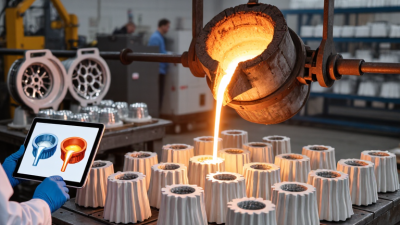
Investment Casting Supplies shape the consistency of every precision-cast component. Wax patterns, ceramic slurry, refractory sand, and binders all affect the final surface and dimensional accuracy. A cracked shell or uneven coating can turn a promising batch into costly rework. The details matter.
Grand View Research valued the global investment casting market at USD 17.62 billion in 2023. Its report forecasts a 5.3% compound annual growth rate from 2024 to 2030. The estimate covers the broader casting market, not supplies alone. That distinction matters. The World Foundry Organization’s annual casting-production census offers another useful industry reference, though it also covers foundry production beyond investment casting.
This overview of China’s top 10 investment casting supplies companies is intended as a practical starting point, not a definitive ranking. Supplier fit depends on alloy compatibility, batch consistency, sample lead times, and quality documentation. Buyers should also ask how suppliers control moisture, particle size, and storage conditions. A polished brochure cannot answer every shop-floor question. Request recent test records, inspect sample packaging, and confirm whether quoted specifications match production lots. Public company information can be incomplete, and supplier capabilities may change. That is an inconvenient limitation, but an important one. Comparing evidence alongside product range can help manufacturers identify credible partners for demanding casting work.
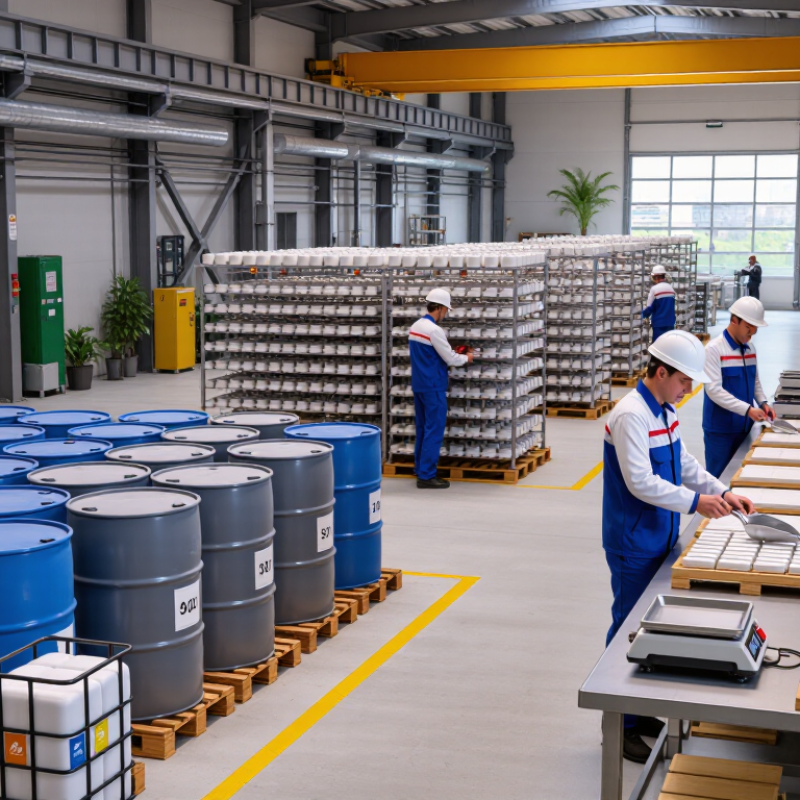
Investment casting supplies are the materials and consumables used to turn a wax pattern into a precise metal component. They include pattern wax, ceramic slurry, refractory stucco, binders, alloys, filters, and tooling for pouring. Each has a distinct job. Wax forms the component’s shape; ceramic layers create the shell that holds molten metal.
In a typical foundry, workers dip a wax assembly into ceramic slurry, then coat it with fine refractory grains. After drying, the wax is removed, and the heated shell receives molten alloy. Filters can help trap inclusions as metal flows through the gating system. Grand View Research estimated the global investment casting market at USD 17.19 billion in 2023, with a projected 5.8% compound annual growth rate from 2024 to 2030. That market estimate signals broad industrial use, but it does not measure supply consumption directly.
Small details matter. A slurry that is too thin may leave a weak shell; uneven drying can cause defects. Temperature, humidity, and material condition all affect results, so foundries track batches and process settings. The awkward part is that a premium-looking supply is not automatically the right one. Teams still need to test compatibility with their alloy, geometry, and production line.
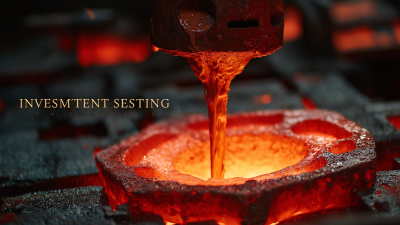
Investment casting supplies support each step of the process, from making wax patterns to finishing and inspecting metal castings. The chart maps common supplies to their typical process sequence; it is not a company ranking or a measure of market share.
Typical supplies include pattern wax and tooling, ceramic slurry and refractory stucco, dewaxing and firing equipment, alloys and crucibles, filters, cutoff tools, abrasives, and inspection gauges. Actual materials and equipment vary with the alloy and casting specification.
China’s investment casting supply market works more like a connected network than a simple ranking of suppliers. Foundries sit at its center, turning wax patterns and ceramic shells into metal components. Around them are specialist firms that make tooling, supply alloys, provide heat treatment, and perform machining or inspection. Some companies handle several stages; others focus on one process.
The structure is practical. A buyer may source castings from a foundry, then arrange precision machining and testing through separate partners. Larger suppliers may coordinate these steps in-house, while smaller workshops often depend on nearby service providers. Regional manufacturing clusters make this coordination easier, though capacity and technical depth can vary from one supplier to another. It is not uniform.
Supplier evaluation should follow the component, not just the quotation. Review drawings, alloy requirements, dimensional tolerances, sample results, and inspection records. Ask who controls tooling changes and how defects are traced between production stages. These details reveal how the supply chain actually works. A polished website cannot replace clear process evidence. And no single supplier structure fits every project. This is easy to overlook when comparing prices quickly.
China Top 10 Investment Casting Supplies Companies?
Criteria for Identifying Leading Chinese Investment Casting Suppliers
A supplier’s ranking should rest on verifiable production capability, not polished photos or a broad product list. Check whether its foundry can handle your specified alloy, part dimensions, and annual volume. Ask for process details, including wax pattern control, shell thickness, pouring temperature records, and finishing capacity. These details reveal whether the supplier understands the work beyond quoting a drawing.
Quality evidence matters. Request sample inspection reports that show dimensional results, surface condition, and any relevant material tests. Confirm how the supplier tracks a part from raw material through casting and final inspection. A clear corrective-action process is also useful when a sample fails. Certifications can support evaluation, but they do not replace a review of actual inspection data. One weakness in many sourcing decisions is treating a certificate as proof that every batch will be consistent.
Tips: Send the same drawing and tolerance requirements to each candidate. Compare sample results, response times, packaging plans, and quoted lead times. Ask who manages engineering questions after the order is placed. Note vague answers; they may signal a process gap, though one awkward email is not conclusive. Check whether tooling ownership, revision control, and sample approval steps are clearly documented before production begins.
China’s investment-casting supply base serves machinery, automotive, energy, and other precision-manufacturing markets. Grand View Research’s Investment Casting Market Size, Share & Trends Analysis Report estimates the global market at about US$17.5 billion in 2023. This is a global figure, not a China-only measure. Still, it shows why buyers compare process control, material range, and delivery reliability—not just unit price.
These ten profiles represent distinct supplier capabilities, rather than a verified ranking. One specializes in stainless-steel pump parts; another focuses on nickel-alloy components for demanding heat conditions. Others make automotive brackets, agricultural wear parts, valve bodies, small medical components, or thin-walled casings. Some combine shell making with CNC machining, while others concentrate on prototypes, short runs, or export inspection. Look for practical evidence: alloy certificates, sample inspection records, dimensional reports, and clear defect-handling procedures. Details matter.
A polished brochure is not proof. Ask how wax patterns are checked, how shell thickness is controlled, and whether critical dimensions are measured after machining. Capacity claims also need context: monthly output may vary with part size, alloy, and order mix. These profiles can guide early screening, but each supplier’s actual performance still requires direct verification. That gap is easy to overlook.
Comparing investment casting suppliers in China takes more than checking a price list. Ask how each factory controls wax patterns, ceramic shells, pouring temperatures, and finishing. A capable supplier should explain its process in clear terms. For example, request inspection records for a small stainless steel valve body, including key dimensions, surface defects, and material results. Specific evidence matters.
Certifications can help, but check their scope, issuing body, and current status. Confirm whether they cover the actual production site and relevant processes. Then compare testing equipment, calibration records, and how nonconforming parts are handled. Ask for sample inspection reports, not just a certificate image. Also discuss tooling ownership, prototype timelines, packaging, and support after delivery. These details reveal how a supplier works when plans change.
Communication is part of capability. Send the same drawing and quality requirements to each candidate, then compare the questions they raise. Do they flag thin walls, tight tolerances, or unclear datum points? That is useful. A polished audit sheet can still miss everyday production problems, so no single document proves reliability. I would also check whether quoted lead times include tooling approval and sample correction. It is easy to overlook that.