China Top Lost Wax Casting Stainless Steel Suppliers?
China’s leading Lost Wax Casting Stainless Steel suppliers are not defined by polished websites alone. Their real capabilities appear in the parts they pour, the records they keep, and the defects they catch before shipment. Lost-wax casting, also called investment casting, can produce intricate shapes and fine surface details. Yet stainless steel still demands careful control of melting, mold preparation, and finishing.
Casting researcher John Campbell has emphasized, “The quality of a casting is determined by the quality of the liquid metal.” That principle is useful when comparing suppliers. Ask how each foundry controls alloy chemistry, pouring temperature, and inspection. Look for material certificates, dimensional reports, and clear answers about non-destructive testing. A sample part can reveal more than a sales brochure. Check thin walls, internal passages, and the finish around small features.
Details matter. A rough edge can complicate assembly. A delayed inspection report can slow a production line. Strong suppliers explain their process and acknowledge its limits. No foundry is perfect. And no checklist catches everything. Buyers should also confirm production capacity, communication practices, and experience with the required stainless steel grade. The best choice depends on the component, not just the supplier’s ranking. This guide explores how to assess China-based Lost Wax Casting Stainless Steel suppliers with practical questions, visible evidence, and a healthy measure of skepticism.
How Stainless Steel Lost-Wax Casting Works
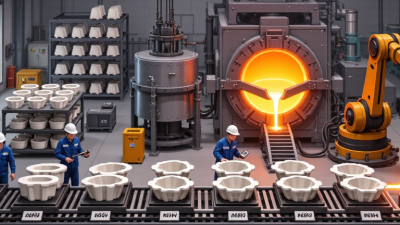
Lost-wax casting begins with a wax pattern shaped like the desired stainless-steel part. A metal die forms the pattern, including fine ribs, lettering, and narrow openings. Workers attach wax runners to guide metal into the mold. The wax disappears. The pattern is repeatedly dipped in ceramic slurry and coated with fine refractory sand. Each layer must dry before the next is added. This takes patience.
Once the ceramic shell is strong, it is heated to remove remaining wax and harden the mold. Molten stainless steel is poured into the hot cavity, then allowed to cool. The shell is broken away, and runners are cut off. The casting is cleaned and checked for surface flaws, dimensions, and internal defects. A smooth shell alone does not guarantee a sound part; inspection still matters. It is easy to describe this as a neat sequence, but shell drying and pouring temperatures leave little room for guesswork.
The material choice also matters. According to worldstainless’s 2023 production report, global stainless-steel melt-shop output reached 58.4 million tonnes. That figure describes broad material production, not investment-casting demand, but it shows the scale of stainless steel’s industrial use. For a casting, engineers select an alloy based on corrosion exposure, strength, and operating temperature. Thin sections can fill poorly, while uneven cooling may cause shrinkage or distortion. Small details, big consequences.
How Stainless Steel Lost-Wax Casting Works
Lost-wax casting forms a wax pattern, coats it in ceramic, removes the wax, fires and preheats the mold, then pours molten stainless steel into it. The values shown are representative process temperatures, not universal specifications; actual settings vary with the wax system, ceramic shell, alloy, and foundry practice.
What to Look for in a Chinese Casting Supplier
China Top Lost Wax Casting Stainless Steel Suppliers?
What to Look for in a Chinese Casting Supplier
A reliable supplier should explain how it controls each stage, from wax patterns and ceramic shells to pouring and finishing. Ask which stainless steel grades it can cast and request material certificates for the grade you need. Check whether its inspection plan covers dimensions, surface defects, and critical features. A clear answer matters. Vague promises do not.
Tips: Send a detailed drawing, expected annual volume, and sample inspection criteria. Ask for a trial casting and a written report. Compare the measured part with your drawing, especially around holes, thin walls, and mating surfaces.
Before placing a large order, review the supplier’s equipment, quality records, and experience with parts similar to yours. Ask how it handles rejected castings and changes to tooling. Communication is part of quality; slow or unclear replies can become costly during production. I would not treat one successful sample as a guarantee, since later batches may vary. Request traceable records and agree on tolerances before production starts. Some details may still need discussion after the first trial, and that is worth acknowledging.
How to Assess Supplier Capabilities and Quality Standards
Assess a lost-wax supplier through process evidence, not polished brochures. Ask how wax patterns are checked, ceramic shells dried, and pouring temperatures recorded. World Stainless Association reported 58.4 million tonnes of global stainless crude-steel production in 2023, 4.6% above 2022. This expanding supply makes reliable grade identification and heat traceability important. Request recent material certificates, chemical analysis, and records linking each casting to its melt batch. Numbers help.
The ISO Survey 2022 recorded about 1.27 million valid ISO 9001 certificates worldwide. Certification shows a quality system exists; it does not prove that a foundry controls thin walls or complex cores well. Ask for dimensional reports, mechanical-test results, and defect records from comparable castings. Where relevant, confirm how the supplier applies ASTM A351/A351M requirements for stainless-steel castings. Review actual inspection samples, not only blank forms. A trial pour can reveal how the team handles rework, measurement, and changing specifications. One checklist will miss something. That is why a factory visit and direct questions still matter.
How Leading Chinese Suppliers Differ in Services and Expertise
Chinese lost-wax casting suppliers differ in how much support they provide beyond pouring metal. Some handle wax tooling, shell making, heat treatment, machining, and inspection under one roof. Others rely on outside workshops for finishing steps. That distinction affects lead time and traceability. Details matter.
The International Stainless Steel Forum’s Stainless Steel in Figures 2024 reported global stainless-steel production of 58.4 million tonnes in 2023. This market context does not measure casting quality, but it underscores the need to specify alloy grades clearly. Ask suppliers how they control melt chemistry, pouring temperature, and heat treatment. Request material test reports tied to the actual production batch, not just a sample certificate.
Expertise also shows in engineering discussions. A capable supplier can review wall thickness, draft, shrinkage allowance, and likely machining needs before tooling begins. Ask for sample inspection records, dimensional reports, and details of non-destructive testing where appropriate. For complex parts, a trial casting can reveal defects that a polished quotation cannot. Yet supplier comparisons are rarely tidy: some firms explain process limits well but provide slower documentation. Buyers should weigh communication, inspection capability, and total finishing scope alongside unit price.
How to Select and Work With the Right Supplier
Choosing a lost wax casting stainless steel supplier starts with the part, not the quote. Share a drawing, alloy grade, expected volume, and the surfaces that must remain visible. Ask how the supplier controls wax patterns, ceramic shells, melting, and finishing. A low price may exclude machining or hide inconsistent dimensions. Check sample parts against an inspection plan. Measure critical dimensions and look for cracks, porosity, or rough edges. Small details matter.
Before ordering, request material certificates and heat-treatment records, and confirm how each production lot is tracked. Agree on tolerances, tooling ownership, revision control, and packaging in writing. A pilot batch can reveal problems before full production. Inspect it together, and record photographs and measurements. Some suppliers may respond quickly but avoid specific process questions. Pause and clarify. Communication affects quality, though it is easy to underestimate. One missed detail can cause a costly delay.
Tips: Send a marked-up drawing and identify critical surfaces. Keep one approved sample for comparison. Record corrective actions, even for minor defects. If a flaw repeats, review the casting process—not just the final inspection. This takes patience.