Lost Wax Steel Casting Tips for Global Buyers to Succeed?
In the dynamic world of manufacturing, Lost Wax Steel Casting has emerged as a pivotal technique. This method offers a blend of precision and creativity, vital for global buyers seeking to enhance their product offerings. Understanding the nuances of this casting process can lead to remarkable outcomes.
To succeed in utilizing Lost Wax Steel Casting, it’s essential to glean insights from industry veterans. Their experiences reveal common pitfalls that can derail projects. Many buyers overlook the importance of quality suppliers. Building trust with a reliable foundry can ensure that the finished products meet expectations consistently.
Moreover, being vigilant about material selection and design intricacies is crucial. Some designs may seem flawless but can lead to costly errors in production. Engaging with experts to assess designs beforehand can save time and resources. By navigating these challenges thoughtfully, global buyers can unlock the full potential of Lost Wax Steel Casting and achieve sustainable success.
Understanding Lost Wax Steel Casting: An Overview for Buyers
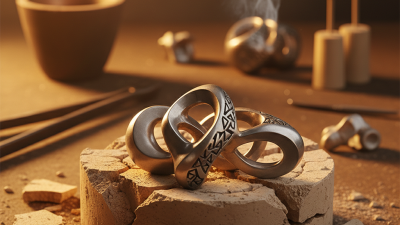
Lost wax steel casting is a precise method that offers excellent detail. This process involves creating a
wax model, coating it with a heat-sensitive material, and then melting away the wax. The result is a cavity that can be filled with
molten steel. Buyers often appreciate this method for its ability to produce intricate designs.
Understand that not every supplier has the same capabilities. Some may offer limited designs or use subpar materials.
Researching potential partners is vital. Look for sellers who have strong reviews and extensive experience in
lost wax casting. Communicating your specific requirements can help ensure better results.
It’s important to acknowledge that challenges may arise. Some buyers find the final cast
not meeting their expectations. These issues usually stem from miscommunication or inadequate material selection.
Establishing clear specifications and checking samples can mitigate these risks. In the end,
an informed buyer can navigate the complexities of lost wax steel casting effectively.
Key Considerations for Choosing a Reliable Casting Supplier
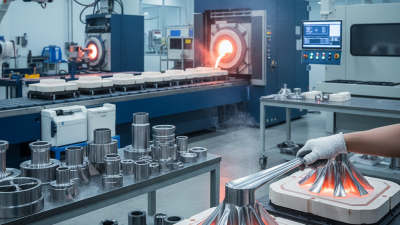
Choosing a reliable casting supplier is critical for success in lost wax steel casting. Start by assessing their experience and expertise in the industry. Look for suppliers with a proven track record, as this often indicates their ability to handle complex projects. Visit their facilities if possible. This can provide insight into their processes and manufacturing capabilities. A walk-through may reveal details about their technology and quality control measures.
Communication is another vital aspect. A good supplier should be responsive and transparent. If they are slow to answer inquiries, this could be a red flag. Ask for references and follow up on them. Talking to other buyers can shed light on the supplier's reliability. Don’t hesitate to ask about their material sourcing and safety standards, as these can impact your project’s outcome.
Pricing is important too, but don’t let it be your only factor. Consider the total value you receive. Cheaper isn’t always better. Evaluate their customer service, delivery times, and after-sales support. Take your time to reflect on your specific needs. A hasty decision can lead to unforeseen challenges down the line, potentially affecting your project and reputation. Always keep your goals in mind while navigating these choices.
Lost Wax Steel Casting Tips for Global Buyers to Succeed
| Criteria |
Importance Level |
Considerations |
| Supplier Experience |
High |
Look for suppliers with at least 5 years in the industry. |
| Quality Assurance |
Critical |
Check for certifications like ISO 9001 for quality management. |
| Production Capacity |
Moderate |
Ensure they can meet your volume requirements. |
| Lead Time |
High |
Confirm realistic timelines for order fulfillment. |
| Customer Service |
High |
Evaluate their responsiveness and support channels. |
| Pricing |
Moderate |
Compare quotes but consider quality over lowest price. |
| Technical Support |
Moderate |
Ensure they provide adequate technical expertise for design requirements. |
Essential Techniques for Inspecting Quality in Cast Steel Products
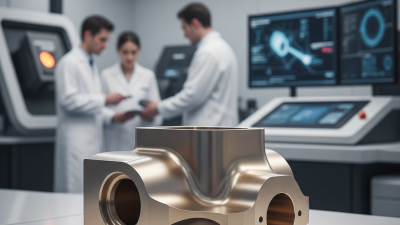
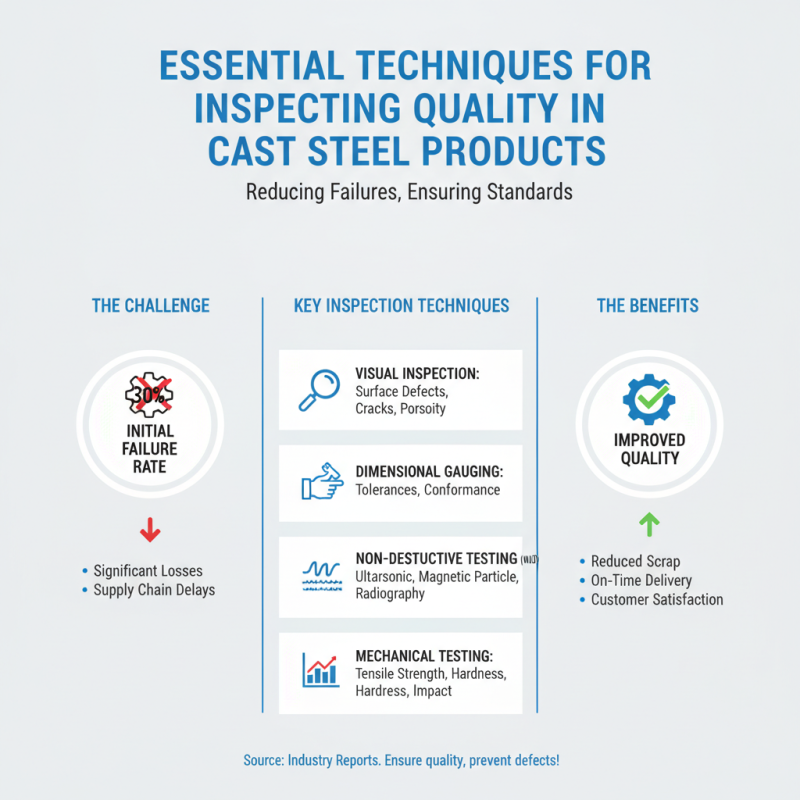
When it comes to cast steel products, quality inspection is crucial. According to industry reports, around 30% of steel castings fail initial quality checks. This statistic highlights the importance of thorough inspection to ensure products meet required standards. Effective techniques for assessing quality can prevent significant losses and delays in the supply chain.
To start, visual inspection is essential. Look for surface defects such as cracks or inclusions. Use standardized metrics, as studies show that effective visual checks can lower defect rates by 25%. Implementing non-destructive testing methods, such as ultrasonic or magnetic particle inspections, further enhances quality assurance. These techniques can detect internal flaws that are not visible to the naked eye.
Tips: Always document inspection results. Data-driven decisions lead to improved quality. Collaborate with suppliers to establish quality benchmarks. Regular audits can help identify recurring issues. Recognizing potential weaknesses in your quality control process is key; it fosters a culture of continuous improvement. Embrace these methods for more reliable cast steel products.
Cost Factors: Budgeting for Lost Wax Steel Casting Projects
When planning a lost wax steel casting project, understanding cost factors is crucial. A detailed budget is essential for successful outcomes. Material costs make up a significant portion of the budget. The grade of steel chosen affects both quality and price. High-performance alloys can be more expensive but may offer better durability and finish.
Labor costs are another important consideration. Skilled artisans are necessary for the intricate process of lost wax casting. Their expertise comes at a premium. Moreover, production timelines can influence overall costs. Tight deadlines often lead to rushing, resulting in higher expenses.
Design complexity is also a significant factor. More intricate designs require additional work in modeling and mold-making. This can add to the total cost. It's vital to strike a balance between complexity and feasibility. Each project has its unique challenges, so engaging with experienced professionals is key to finding cost-effective solutions.
Cost Factors in Lost Wax Steel Casting Projects
Navigating International Logistics for Casting Deliveries
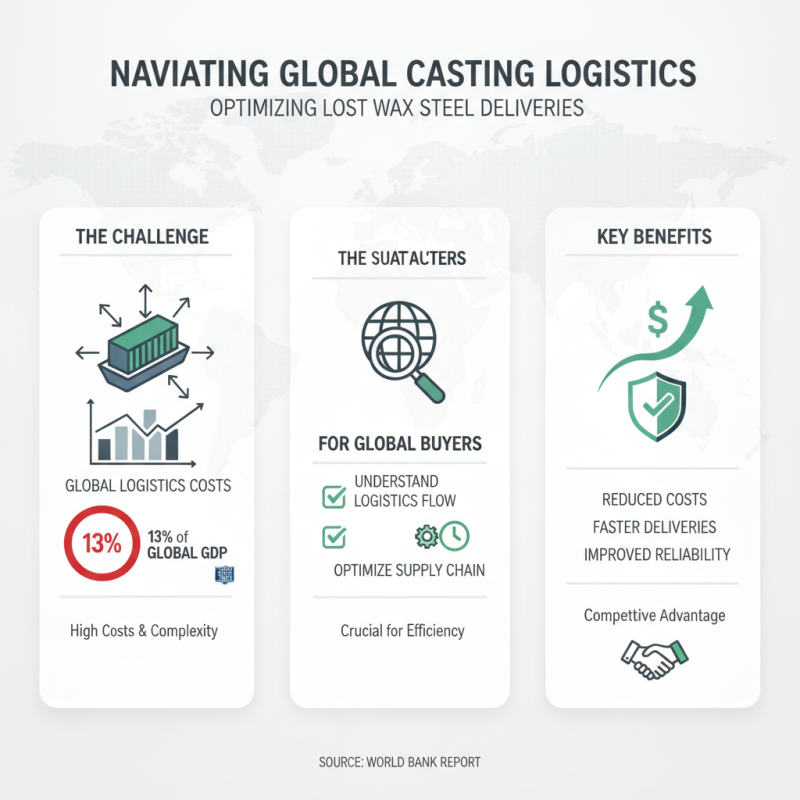
Navigating international logistics for lost wax steel casting deliveries can be challenging. According to a report by the World Bank, logistics costs can account for up to 13% of a country's GDP. For global buyers, understanding and optimizing these logistics is crucial.
Efficient communication with suppliers is vital. Use clear, concise language to avoid misunderstandings. Language barriers can lead to costly mistakes, especially in logistics planning. Ensure your shipping partner is knowledgeable about customs regulations and procedures in both the exporting and importing countries.
Tips for successful logistics include tracking shipments in real-time. This helps manage expectations and anticipate delays. It's also essential to have contingency plans. Unexpected issues, like customs hold-ups or shipping damage, can disrupt timelines. Regularly review your logistics strategy to identify areas for improvement.
Incorporating technology can streamline operations. Many businesses are using warehouse management systems to improve inventory tracking. Yet, ongoing training for staff is often overlooked. An informed team is less likely to make errors that could cost you time and money. Continuous flexibility is key; adapt to new challenges as they arise.