Leave Your Message

How to Choose a Precision Casting Supplier?

Choosing a Precision Casting supplier is not just a price comparison. A turbine blade, surgical instrument, and pump housing can demand different alloys, tolerances, and inspection plans. Small process gaps matter. A wax pattern may look flawless, yet hidden porosity can emerge after machining. Buyers should assess process control, technical communication, traceability, and the supplier’s ability to prove consistent results.

The scale of the market makes careful evaluation relevant. Grand View Research estimated the global investment casting market at about USD 17.6 billion in 2023 and projected continued growth through 2030. This is an industry estimate, not a guarantee of supplier quality. John Campbell, a casting researcher and author of The Ten Rules of Castings, states, “The melt must be clean.” That brief rule points to a larger issue: reliable castings depend on disciplined control before the metal enters the mold.

A useful supplier review asks for more than a polished sample. Request material certificates, inspection records, process capability evidence, and examples of corrective actions. Ask how the supplier handles tooling changes, first-article approval, and nonconforming parts. Then compare answers against your component’s actual risks. A glossy brochure is easy. Verifiable evidence is better. Still, no checklist can replace a technical conversation, and buyers sometimes overlook that. A supplier may meet every stated requirement yet struggle when designs change or production volumes rise. This outline explains how to test those claims and choose a partner whose capabilities fit the part, not merely the quotation.

How to Choose a Precision Casting Supplier?

Define Your Casting Requirements and Project Specifications

Before contacting a precision casting supplier, define what the part must do and where it will operate. Specify the alloy, expected order quantity, service temperature, and exposure to moisture or chemicals. A pump housing used outdoors may need different corrosion resistance from a small bracket inside a dry machine. Small details matter.

Provide a current drawing or 3D model with dimensions, tolerances, and critical features clearly marked. Identify surfaces that need machining, threaded holes, and any areas where porosity is unacceptable. If a dimension is flexible, label it as such; tight tolerances across every surface can add cost without improving function. Include the required inspection records, surface finish, and any testing that supports acceptance. Be precise, but do not pretend every requirement is settled.

Describe the part’s assembly conditions and the consequences of failure. A supplier can assess feasibility more accurately when they know how the casting fits, loads, and connects to neighboring components. Share the target delivery schedule and whether prototypes are needed before production. If the design is still changing, say so. That may affect tooling and quote assumptions. A short review of the specification with the supplier can expose unclear callouts before they become costly revisions.
Assess the Supplier’s Processes, Materials, and Technical Capabilities

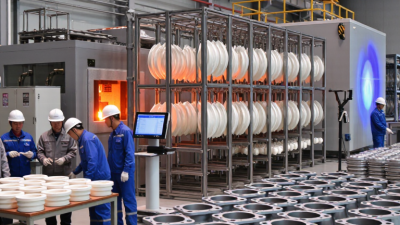
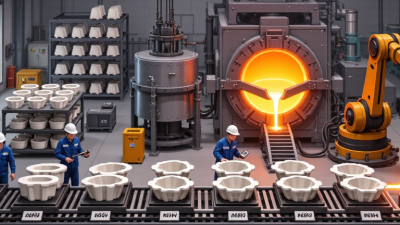
A precision casting supplier should explain how each operation controls variation, not merely display a quality certificate. Ask for the actual wax injection, shell-building, dewaxing, pouring, and inspection controls used for your part. Request recent process records, including furnace temperature logs, alloy chemistry results, and dimensional inspection reports. The ISO Survey 2022 recorded 1,265,216 valid ISO 9001 certificates worldwide. That scale makes certification useful, but not enough: it does not prove a supplier can repeatedly hold your tolerances.

Check materials against the drawing and service conditions. Ask how the supplier verifies alloy identity, manages melt chemistry, and traces each heat through production. For critical features, review sample certificates and agree on suitable testing, such as radiography or penetrant inspection. ASTM standards can help define consistent test methods. Still, a test plan should match the part’s risks; more inspection is not automatically better.

Technical capability shows in the details. Can the supplier explain expected shrinkage, gating choices, machining allowance, and likely defect locations for your geometry? Ask for a first-article plan and evidence from comparable parts, not just a machine list. Visit the floor if possible. Watch how operators handle shells and record process changes. One awkward point: polished sample parts can hide unstable production. Ask to see ordinary batch records, including a nonconformance and its corrective action.

How to Choose a Precision Casting Supplier? — Assess the Supplier’s Processes, Materials, and Technical Capabilities

Reference melting points of common precision-casting base metals (°C)

These are standard melting points for the pure elements, not pouring temperatures for specific alloys. When assessing a supplier, confirm its experience, equipment, and process controls for your exact alloy and casting requirements.

Evaluate Quality Controls, Certifications, and Inspection Methods

A precision casting supplier should be able to explain how quality is controlled at each stage, from wax pattern production to final machining. Ask how critical dimensions are monitored and whether control charts show stable results across production runs. A certificate matters, but it is only a starting point. Check its scope, current status, and relevance to the parts you need. Also ask for material traceability, heat-treatment records, and documented responses to nonconformances.

Look at inspection methods that match the part’s risks. Coordinate measuring machines can verify complex dimensions; calibrated gauges suit repeat checks on key features. For internal defects, radiography may be appropriate, while penetrant testing can reveal surface-breaking flaws. Not every casting needs every test. The supplier should explain the sampling plan and acceptance criteria, rather than simply listing equipment. Ask to see a sample inspection report, including actual readings and instrument calibration details.

A clean audit report is useful. The shop floor tells more. Notice whether operators can identify the correct revision and whether rejected parts are clearly separated. Some records may be incomplete; that deserves a direct explanation, not an automatic rejection. Compare the supplier’s stated controls with recent production evidence, and agree on what must be reported when a process changes. Small inconsistencies matter. They can reveal where quality depends too much on individual judgment.

Compare Pricing, Lead Times, Communication, and Production Capacity

A low unit price can hide expensive tooling, inspection, or freight costs. Compare quotes using the same alloy, annual volume, tolerance requirements, and finishing steps. Ask whether tooling is a one-time charge and what happens if a casting fails inspection. A detailed breakdown makes differences easier to explain. Watch for vague allowances.

Lead times need the same scrutiny. Ask for separate dates for tooling, first-article samples, and routine production. A supplier may quote six weeks but exclude sample approval or finishing. Request a realistic schedule with named milestones, then check how delays are reported. A spreadsheet alone can fool you.

Communication and capacity affect delivery just as much as price. Notice whether technical questions receive specific answers, such as how a thin wall or deep cavity will be inspected. Ask who handles engineering changes and how quickly revised drawings are reviewed. Request examples of recent production volumes and current machine loading, not just a maximum capacity figure. A packed schedule matters. It may leave little room for urgent revisions, and that trade-off deserves an honest conversation before placing an order.

How to Choose a Precision Casting Supplier? - Compare Pricing, Lead Times, Communication, and Production Capacity

The anonymous supplier profiles below are illustrative planning benchmarks, not verified company data or live quotations. Pricing and schedules vary with alloy, part weight, geometry, tolerances, order quantity, tooling requirements, and inspection scope.

Comparison Dimension Profile A: High-Volume Producer Profile B: Mid-Sized Generalist Profile C: Cost-Focused Exporter Profile D: Low-Volume Specialist
Best fit Repeat orders with stable designs and substantial annual demand Projects needing a balance of flexibility, cost, and output Cost-sensitive orders with flexible schedules and clear specifications Complex parts, smaller batches, or demanding engineering support
Indicative unit price
(USD per part)
$18–$32 $22–$40 $14–$28 $30–$60
Price comparison basis Illustrative range for a stainless-steel investment casting weighing approximately 0.5–2 kg, ordered in a production batch of about 1,000 pieces. Excludes shipping, duties, and any unusually extensive testing or finishing.
Indicative tooling cost
(USD, one-time)
$8,000–$20,000 $4,000–$12,000 $3,000–$10,000 $6,000–$18,000
Sample and first-article lead time 8–12 weeks 6–10 weeks 10–16 weeks 5–8 weeks
Typical repeat-order lead time 6–9 weeks 5–8 weeks 8–12 weeks 4–7 weeks
Indicative monthly casting capacity 20–50 metric tonnes 5–20 metric tonnes 10–30 metric tonnes 1–8 metric tonnes
Communication pattern to look for Dedicated project contact; formal change-control and production updates Direct engineering and sales contact; regular milestone updates Confirm response times, technical English capability, and escalation path Frequent engineering discussions; direct access to technical decision-makers
Quality evidence to request Current quality-system certificate, inspection plan, material traceability, and sample inspection report Process-control records, material certificates, dimensional results, and corrective-action procedure Certificate validity, traceability examples, calibration records, and independent inspection options First-article inspection, capability evidence for critical features, and documented nonconformance handling
Potential advantage Strong repeatability and capacity for larger, recurring programs Often offers a practical balance between production scale and responsiveness May provide a lower initial price for suitable, well-defined work Can give more attention to complex geometry and low-volume development work
Potential trade-off Higher tooling investment or less flexibility for very small batches Available capacity and lead time may change with the production schedule Longer logistics or communication cycles may affect total delivery risk Higher unit cost and limited ability to absorb sudden volume increases
Questions to ask before selection Can capacity be reserved, and how are design changes managed? What are the committed sample and repeat-order dates? What is included in the quote, and how are inspection and freight handled? How are prototypes transitioned into repeatable production?

Compare written quotations on the same basis: alloy and material standard, part weight, annual and batch quantity, tooling ownership, machining and finishing, inspection requirements, delivery terms, and payment terms. Confirm actual capacity and lead times directly with each prospective supplier.

Verify Supplier Experience and Confirm the Final Selection

A supplier’s years in business tell only part of the story. Ask whether its team has produced castings with similar alloy, geometry, wall thickness, and annual volume. Request examples of inspection records, not just finished-part photographs. A cut section can reveal porosity that a polished surface hides. Details matter. Confirm who checks wax patterns, shell quality, melt chemistry, and final dimensions. Ask how often those checks are recorded and who reviews a failed result.

Before making the final selection, visit the facility if practical, or arrange a live video walkthrough. Look for clear work instructions, calibrated measuring tools, and parts identified by production lot. Speak with a technical contact and a quality contact; compare how they explain the same risk. Then place a controlled pilot order with written requirements for samples, tolerances, documentation, and delivery dates. Agree on how design or process changes will be approved. No checklist catches every variation. A sample can meet the drawing while later production drifts, so review the supplier’s corrective-action process and response time. If a small detail remains vague, pause and ask again; the schedule may be real, but so is the cost of an unclear acceptance criterion.