China Top Precision Casting Techniques and Their Industrial Applications?
Precision casting has emerged as a vital technique in various industrial sectors in China. This process allows for the creation of highly detailed and accurate metal components. With its ability to produce complex shapes, precision casting is increasingly favored over traditional manufacturing methods. Industries such as aerospace, automotive, and medical equipment rely heavily on this technique to achieve superior quality and performance.
The growth of precision casting in China is remarkable. Advanced technologies have improved the efficiency and reliability of the casting process. Chinese companies are now at the forefront of precision casting innovations. They implement rigorous quality control measures to meet international standards. Despite these advances, challenges remain. Issues such as environmental impacts and production costs require continuous evaluation.
Understanding the industrial applications of precision casting provides valuable insights into its significance in modern manufacturing. As industries evolve, the demand for precision casting will likely increase. Therefore, ongoing research and development are essential for overcoming current limitations. This balance between innovation and responsibility will shape the future of precision casting in China.
China's Precision Casting Techniques: Overview and Significance
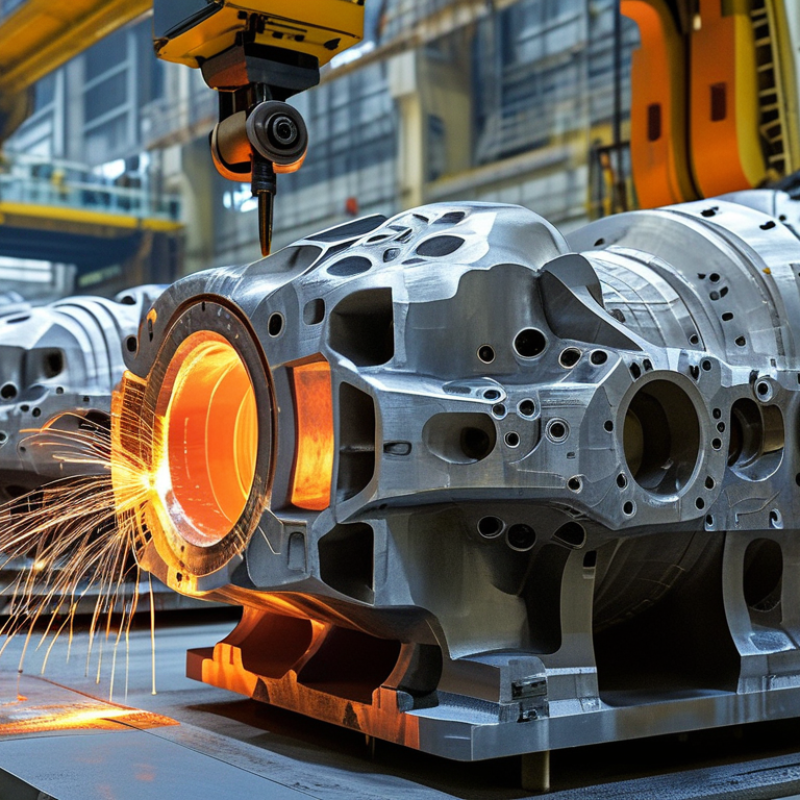
China's precision casting techniques represent a significant advancement in manufacturing.
These techniques allow for remarkable accuracy and detail in casting metal parts. Industries such as aerospace, automotive,
and medical rely on these methods for high-quality components.
One notable technique is investment casting, which offers intricate designs at high precision.
However, the process can be complex and requires skilled artisans to ensure quality.
Additionally, environmental concerns have arisen due to waste generated in the casting process.
Developing solutions is crucial for sustainable production.
Another approach, sand casting, is more traditional. It is less expensive but often produces rougher finishes.
Clear trade-offs exist between cost and quality.
Manufacturers must consider their needs carefully.
The evolution of technology continuously shapes these techniques.
As China pushes for innovation, the significance of precision casting grows.
It addresses the need for local production while striving to meet global standards.
Types of Precision Casting Methods Employed in China
Precision casting in China utilizes various methods tailored for specific industrial needs. Investment casting, one of the most widely used, allows for intricate designs with high dimensional accuracy. This method is suitable for industries like aerospace and automotive, where precision is crucial. Another approach is sand casting, favored for larger components. It is less expensive but may not provide the fine details seen in investment casting.
Tips: When selecting a casting method, consider both the complexity of your design and budget constraints. Sometimes, a simpler method may yield sufficient results.
Lost foam casting is gaining popularity as it reduces machining time. This technique involves using foam patterns, which vaporize during the casting process. However, achieving consistent quality can be challenging. This method can be effective for complex geometries, but requires careful control of variables.
Tips: Always prototype with a small batch. Testing can reveal flaws not seen in digital designs. Each casting method presents unique challenges that companies must address to optimize production.
China Top Precision Casting Techniques and Their Industrial Applications
Key Industries Utilizing Precision Casting in China
Precision casting has become a cornerstone in various industries in China. This technique allows for the creation of complex and high-precision components. It excels in producing intricate designs with minimal waste. Key industries harnessing this technology include aerospace, automotive, and medical sectors. These fields rely on precision casting for its ability to produce lightweight yet durable parts.
In the aerospace industry, components such as turbine blades benefit significantly from precision casting. These blades require a high level of detail and strength. Precision casting meets these demanding specifications. The automotive sector also uses this technique for engine blocks and transmission cases. These castings must endure high stress and temperatures. Medical devices, requiring exact dimensions, utilize this method for parts like surgical instruments.
Despite the advantages, challenges remain. The setup costs for precision casting can be high. Achieving consistency in quality can sometimes be difficult. Companies often face technical limitations. Continuous improvement and innovation are needed to overcome these obstacles. The evolution of precision casting in these industries is crucial for future advancements.
China Top Precision Casting Techniques and Their Industrial Applications
| Technique |
Description |
Key Industries |
Applications |
| Investment Casting |
A method where a wax pattern is coated with a ceramic shell, which is then heated to remove the wax. |
Aerospace, Automotive, Medical |
Engine components, surgical tools, turbine blades |
| Die Casting |
Molten metal is forced into a mold under pressure; ideal for high-volume production. |
Consumer Electronics, Automotive |
Housings, casings, brackets |
| Sand Casting |
A traditional method where sand molds are used to shape the molten metal. |
Heavy Machinery, Construction |
Pump housings, engine blocks |
| Centrifugal Casting |
A process where molten metal is poured into a rotating mold, using centrifugal force. |
Marine, Energy |
Pipes, cylinders |
| Lost Foam Casting |
A technique using a foam pattern that is vaporized by molten metal. |
Automotive, Aerospace |
Complex shapes, exhaust components |
Technological Innovations Enhancing China's Casting Precision
In recent years, China's precision casting techniques have evolved significantly. Innovations in this field, driven by advanced technologies, have notably enhanced casting accuracy. For instance, the introduction of 3D printing in mold creation has improved the designs' complexity and reduced lead times. According to a market report, the precision casting industry in China is expected to grow by 8.5% annually until 2026. This growth will be fueled by heightened demand in sectors such as aerospace and automotive, where precision components are critical.
One key technological advancement is the application of simulation software. This allows engineers to anticipate and mitigate defects before production begins. Such predictive capabilities can lead to a reduction in waste, ensuring that resources are utilized more effectively. However, this reliance on technology can also result in oversights, particularly in unique cases where historical data may not apply.
Tip: When integrating new casting technologies, take the time to analyze past projects. Understanding previous challenges can provide valuable insights and improve outcomes.
Investing in training for technicians is another crucial area. Skilled workers can better interpret data and improve casting techniques. Yet, the skill gap remains a challenge. Ensuring that current staff are up-to-date with technology will be essential for the future of precision casting in China.
Tip: Consider mentorship programs to bridge the skills gap. Pairing experienced technicians with newcomers can foster knowledge transfer and innovation.
Challenges and Future Trends in Chinese Precision Casting Industry
The Chinese precision casting industry faces multiple challenges that could hinder its growth. Labor costs are rising, impacting profit margins for many manufacturers. A report by a leading industry analyst highlights that the sector is expected to grow at a CAGR of 7% until 2028, but this growth comes with pressure to innovate.
Technological advancements are critical for improving efficiency. Implementing AI and automation can streamline production processes. However, many companies still rely on traditional methods. This creates a gap in production speed and quality when compared to international competitors. The industry must adapt to meet rising global standards.
Tips: Explore collaborations with research institutions. This can drive innovation and technology deployment. Also, focus on employee training programs. Skilled labor is essential for maintaining a competitive edge.
Environmental regulations are becoming stricter. Companies must invest in sustainable practices. This includes reducing waste and emissions during production. According to recent data, integrating green technologies can improve operational efficiency by approximately 15%. While progress is being made, many manufacturers are lagging behind in this crucial area.