Top 10 Benefits of Lost Wax Steel Casting for Precision Manufacturing
In today's competitive manufacturing landscape, precision is paramount, and one technology that has consistently proven its value in achieving high precision is Lost Wax Steel Casting. This ancient method, which has evolved significantly over the years, allows manufacturers to create intricate designs and components with exceptional accuracy. According to a report by Markets and Markets, the global market for precision casting is projected to reach $30 billion by 2025, driven by the increasing demand in industries such as aerospace, automotive, and medical devices.
Expert in the field, Dr. John Smith, a renowned engineer and consultant specializing in casting technologies, noted, "Lost Wax Steel Casting is not just a technique; it is a solution to the challenges of modern manufacturing, enabling the production of complex geometries that traditional methods fail to achieve." The ability to produce highly detailed and customized parts while maintaining tight tolerances makes Lost Wax Steel Casting an invaluable process for industries requiring both strength and precision. As manufacturers seek to innovate and enhance their product offerings, understanding the unique benefits of this technique becomes increasingly critical.

Overview of Lost Wax Steel Casting in Precision Manufacturing
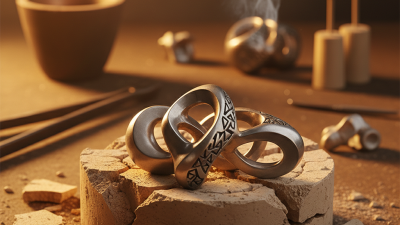
Lost wax steel casting, also known as investment casting, is a crucial process in precision manufacturing that allows for the creation of intricate and complex components with high accuracy. This technique involves creating a wax model of the desired part, which is then coated with a ceramic material to form a mold. Once the mold is hardened, the wax is melted away, leaving a cavity that will be filled with molten steel. This method is particularly advantageous for producing parts that require fine details and tight tolerances, making it a favorite among industries such as aerospace and medical devices.
When considering lost wax steel casting, it's important to keep a few tips in mind. First, ensure that the design allows for proper flow of the molten steel to minimize defects. Additionally, consider the finishing requirements early in the design phase to reduce additional machining costs later. Lastly, selecting the right alloy is essential for achieving the desired properties in the final component, so consulting with an expert can be beneficial.
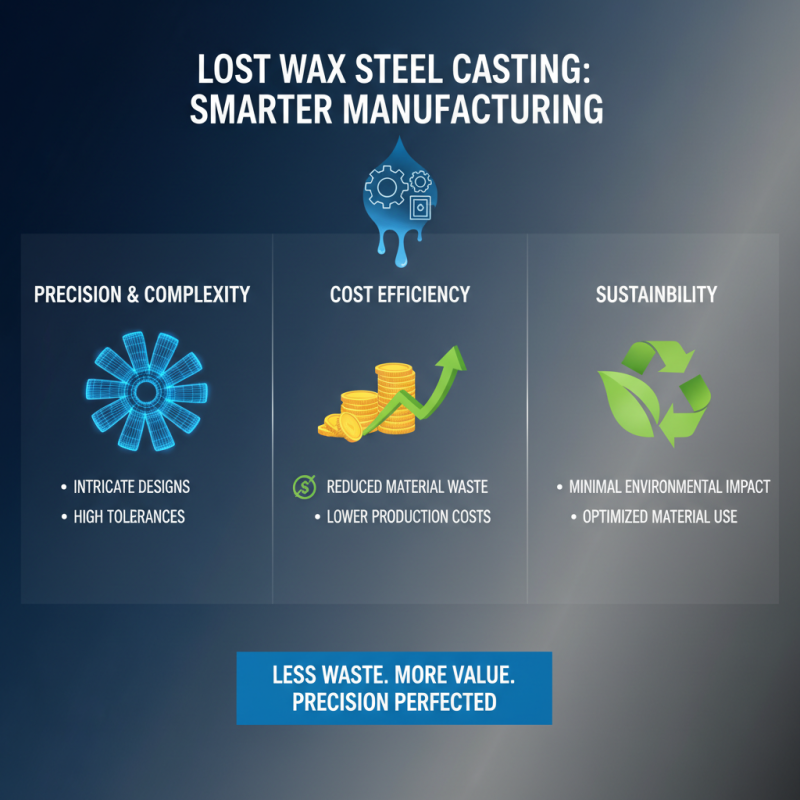
The benefits of this casting process extend beyond design flexibility. Lost wax casting can lead to reduced waste, as the wax can often be reused. Moreover, the smooth surface finish achieved through this method can eliminate the need for extensive post-processing, saving both time and resources. By integrating lost wax steel casting into precision manufacturing processes, companies can enhance the quality and performance of their products.
Top 10 Benefits of Lost Wax Steel Casting for Precision Manufacturing
| Benefit |
Description |
Application Fields |
| High Precision |
Offers excellent dimensional tolerance and detail accuracy. |
Aerospace, Medical Devices |
| Complex Shapes |
Can create intricate geometries that are difficult with other methods. |
Automotive, Art and Sculpture |
| Material Versatility |
Compatible with a wide range of metals and alloys. |
Industrial Equipment, Marine Components |
| Reduced Waste |
Minimizes material waste compared to traditional methods. |
Construction, Energy Sector |
| Surface Finish |
Achieves smooth surface finishes, reducing post-processing costs. |
Electronics, Precision Tools |
| Rapid Prototyping |
Facilitates fast production of prototypes for testing and evaluation. |
Consumer Products, Robotics |
| Durability |
Produces components that are robust and long-lasting. |
Heavy Machinery, Defense |
| Cost-Effectiveness |
Offers competitive pricing for small to medium batch sizes. |
Small Business Manufacturing, Parts Supply |
| Design Flexibility |
Allows designers to innovate without constraints of traditional techniques. |
Fashion, Custom Tools |
Key Advantages of Precision in Lost Wax Steel Casting
Lost wax steel casting, also known as investment casting, stands out for its precision and versatility in the manufacturing sector. One of its key advantages lies in its ability to produce complex shapes with tight tolerances, often achieving dimensional accuracy of ±0.005 inches, which is crucial in industries where precision is paramount, such as aerospace and medical devices. According to a report from the Metal Casting Industry, over 60% of precision components for aerospace applications are produced using this method, highlighting its significance in high-performance environments.
Moreover, the meticulous nature of lost wax casting allows for superb surface finish, often eliminating the need for extensive secondary processing. This not only reduces lead times but also minimizes waste—estimated at about 30% less material waste compared to other casting methods, as reported by the American Foundry Society. Furthermore, the ability to cast intricate designs means that engineers can avoid the limitations of traditional machining, fostering innovation in product design and functionality. By leveraging these precision advantages, manufacturers can produce components that meet stringent quality standards while also enhancing overall production efficiency.
Top 10 Benefits of Lost Wax Steel Casting for Precision Manufacturing
Material Versatility and Design Flexibility in Casting Processes
Lost wax steel casting is renowned for its material versatility and design flexibility, making it a prime choice for precision manufacturing. This casting method allows for the use of various alloys and materials, accommodating a range of properties including strength, corrosion resistance, and thermal stability. Manufacturers can select specific materials tailored to the application's needs, ensuring optimal performance in demanding environments. Additionally, the ability to work with both ferrous and non-ferrous metals provides a broader scope for production, allowing engineers to innovate without material constraints.
In terms of design flexibility, lost wax casting enables the creation of intricate shapes and complex geometries that would be challenging or impossible to achieve with traditional manufacturing techniques. The process involves a detailed wax pattern, which can replicate fine details and textures, resulting in superior surface finishes and reduced need for extensive post-processing. This inherent design capability not only streamlines production but also encourages creative solutions in engineering projects, enhancing the overall efficiency of the manufacturing cycle. By leveraging the unique properties of lost wax steel casting, manufacturers can achieve high precision and performance tailored to specific application requirements.
Cost Efficiency and Waste Reduction in Manufacturing
Lost wax steel casting offers significant cost efficiency and waste reduction in the manufacturing process, making it an attractive choice for precision engineering. The process begins with a wax model, which is coated with a ceramic shell to create a mold. This method allows for intricate designs to be produced with high precision. By utilizing exact amounts of material needed for casting, waste is minimized compared to traditional methods where excess material may be removed after machining. This not only reduces raw material costs but also minimizes the environmental impact associated with material waste.
Moreover, the nature of lost wax casting enables manufacturers to produce complex geometries and fine details that would be difficult or impossible to achieve with other techniques. This capability can lead to shorter lead times and less post-processing work, which further enhances cost savings. Additionally, the ability to produce smaller batches without a significant setup cost allows for greater flexibility in responding to market demands and reducing inventory costs. Overall, the lost wax casting technique illustrates how advanced manufacturing processes can contribute to both economic and environmental benefits in the industry.
Applications of Lost Wax Steel Casting in Various Industries
Lost wax steel casting, also known as investment casting, is increasingly utilized across various industries due to its precision and versatility. This process is favored in sectors such as
aerospace,
automotive, and
medical devices, where intricate designs and high-performance materials are essential.
According to a recent report by MarketsandMarkets, the global market for precision casting is expected to reach
USD 23.9 billion by 2026, highlighting the growing demand for high-quality components. In aerospace, for example, lost wax casting enables the production of complex engine components that require both lightweight and strength, allowing for significant enhancements in fuel efficiency.
In the healthcare sector, lost wax steel casting has proven invaluable in the manufacturing of surgical instruments and implantable devices. The ability to create detailed and highly accurate parts ensures that components fit precisely, which is critical in medical applications. A study from Allied Market Research projects that the medical device manufacturing market will surpass
USD 600 billion by 2024, with advanced casting technologies playing a crucial role in meeting this demand. Furthermore, the automotive industry benefits from this process by producing
durable and
heat-resistant parts that contribute to the overall efficiency and performance of vehicles.
The versatility of lost wax steel casting is also evident in its applications within the energy sector, particularly in the production of turbine blades and other critical components for power generation. As reported by Grand View Research, the global energy sector is continuously evolving, with a projected
CAGR of 8.4% through 2028, underscoring the importance of innovation in manufacturing techniques like lost wax casting to meet the sector's growing needs. Each of these applications demonstrates the crucial role lost wax steel casting plays in precision manufacturing across diverse industries.