How to Source Quality Marine Copper Casting for Your Business?
Sourcing quality marine copper casting is essential for success in the maritime industry. This specialized casting involves processes that ensure durability and performance under harsh conditions. Effective sourcing requires knowledge, experience, and attention to detail.
Finding reliable suppliers is not always straightforward. You may encounter inconsistent quality or misleading information. Researching supplier backgrounds can prevent potential issues. It's wise to ask for samples and verify their capabilities. Interactions with past clients can reveal a supplier's reputation.
Understanding the unique properties of marine copper casting is crucial. It must withstand corrosive environments. Knowledge of different alloys and techniques elevates your decision-making process. A strong supplier will provide expert advice. Quality assurance measures must be in place to ensure consistency. Sourcing the right materials now can save costs in the long run. Your choices today shape your business’s future.
Understanding Marine Copper Casting and Its Applications
Marine copper casting is vital for various applications, particularly in maritime environments. It boasts excellent corrosion resistance and durability, which makes it appealing for components like propellers and fittings. The marine industry demands high standards, so understanding the properties of marine copper is crucial.
When sourcing marine copper casting, consider the specifications of the application. Different alloys serve distinct purposes. For instance, bronze alloys may offer better wear resistance, while copper-nickel alloys excel in resisting corrosion. It’s important to verify that the supplier maintains quality certifications. Don’t hesitate to ask for material test reports.
Tips: Always check the foundry’s experience. A skilled foundry can ensure consistency and reduce defects. Also, engage with suppliers who understand marine standards. Their expertise can guide you in selecting the right alloy. Keep in mind that even reputable suppliers may have variations in quality. Therefore, establishing a feedback loop is beneficial for long-term partnerships.
How to Source Quality Marine Copper Casting for Your Business?
| Casting Type |
Weight Range (kg) |
Applications |
Material Grade |
Typical Lead Time (weeks) |
Quality Standards |
| C95400 Bronze |
10 - 200 |
Marine Propellers |
C95400 |
6-8 |
ASTM B505 |
| C46200 Naval Bronze |
5 - 100 |
Seawater Pumps |
C46200 |
4-6 |
ASTM B150 |
| C63000 Nickel-Aluminum Bronze |
15 - 300 |
Bow Thrusters |
C63000 |
8-10 |
ASTM B150 |
| C65100 Aluminum Bronze |
10 - 150 |
Marine Hardware |
C65100 |
5-7 |
ASTM B148 |
Identifying Quality Standards for Marine Copper Castings
When sourcing marine copper castings, quality is paramount. Identifying the right quality standards can be challenging. Start by understanding the material specifications. Marine-grade copper must resist corrosion. Look for certifications that guarantee durability and reliability. These documents illustrate a manufacturer’s commitment to quality.
Inspect the production process as well. The casting method can influence the final product. Techniques like investment casting may yield superior results. However, some manufacturers may cut corners, compromising quality. Always ask for transparency in their practices. If a supplier is hesitant, consider it a red flag.
Pay attention to surface quality and dimensional accuracy. Small inconsistencies can lead to significant issues in marine applications. Such flaws may affect performance and safety. Reliable suppliers should provide samples for evaluation. Testing these samples against your standards helps in making informed decisions. Trust but verify; the right casting can make a big difference.
Quality Standards for Marine Copper Castings
This chart illustrates the quality standards for marine copper castings, highlighting key metrics such as dimensional accuracy, surface finish, chemical composition, mechanical properties, and weight tolerance. Each metric is rated out of 100, providing a clear visual representation of quality assessment criteria for sourcing marine copper castings.
Evaluating Suppliers for Marine Copper Casting
When evaluating suppliers for marine copper casting, it's crucial to assess their reliability and expertise. Industry reports indicate that nearly 30% of casting defects stem from poor supplier quality. Ensuring quality starts with scrutinizing a supplier's production processes. A reliable supplier often adheres to ISO certifications, which can reflect their commitment to quality. Avoid suppliers with an inconsistent history of inspections.
Tips:
Visit manufacturing facilities. This hands-on approach can reveal a lot. Look for cleanliness and organization in the workspace. These aspects often indicate supplier diligence.
Next, consider the supplier's experience in marine applications. Suppliers who specialize in marine casting should understand the unique challenges posed by saltwater environments. They should be familiar with appropriate alloys and finishing techniques. Data shows that castings made with specific marine-grade copper have a significantly lower corrosion rate, enhancing durability and longevity. Comparing supplier specifications can help mitigate risk.
Tips:
Request samples for evaluation. This step can help identify quality variations before committing to larger orders. Always review their past performance and customer testimonials to ensure credibility.
Methods of Testing and Inspecting Copper Castings
When sourcing marine copper castings, testing and inspection become vital. Quality assurance ensures that the castings meet safety and performance standards. One common method involves visual inspection. A skilled technician closely examines the surface for imperfections. This can reveal issues like porosity or surface cracks. A good eye can spot even minor defects, which might affect performance.
Another essential method is chemical analysis. This analysis helps determine the copper's composition. High-quality marine copper castings should meet specific alloy standards. Testing samples in a lab can ensure compliance with these standards. Sometimes, the results reveal unexpected variations that need addressing.
Dimensional inspection is equally important. Measuring the size of castings ensures they fit as intended. Poorly dimensioned parts can lead to assembly challenges. It's crucial to prioritize these checks, despite the time they may take. Each of these methods plays a role in securing quality. However, combining them with feedback from users also provides deeper insights. This reflective process can enhance product development in future casting projects.
Building Relationships with Reliable Marine Copper Casting Manufacturers
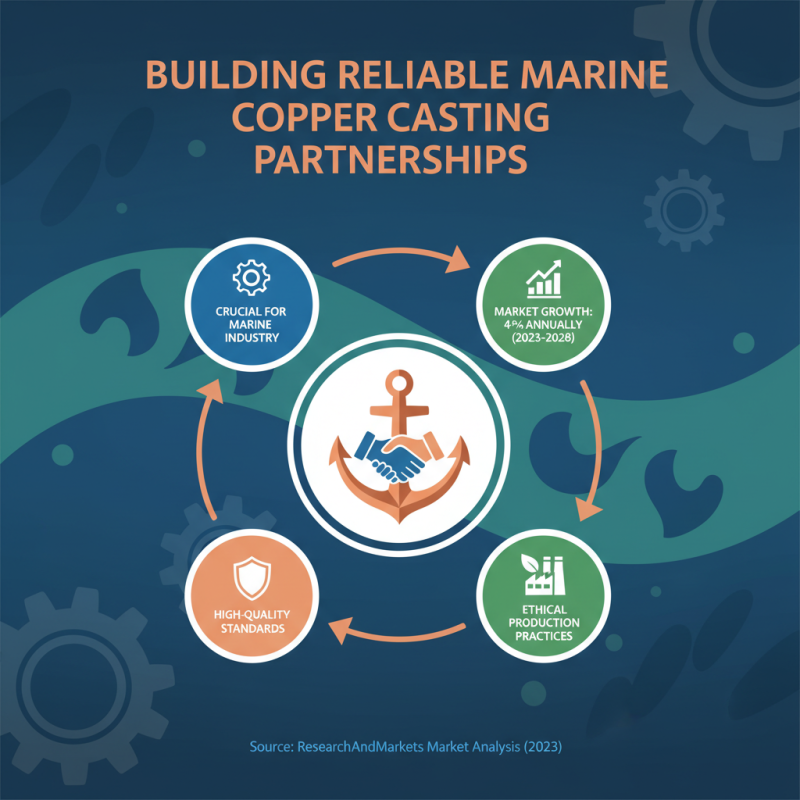
Building robust relationships with reliable marine copper casting manufacturers is crucial for any business operating in the marine industry. According to a recent market analysis by ResearchAndMarkets, the marine casting market is projected to grow by over 4% annually from 2023 to 2028. This growth presents an opportunity for businesses to partner with manufacturers who can meet high-quality standards while maintaining ethical production practices.
Establishing a strong connection with manufacturers involves clear communication and transparency. Engaging in regular discussions can help clarify production processes and quality control measures. A comprehensive review of supplier audits can reveal areas of strength and potential weaknesses. Industry reports suggest that suppliers with established quality systems tend to have lower defect rates, impacting overall project timelines and costs.
In a competitive landscape, choosing the right partners is not just about price. It’s about quality and reliability. Look for manufacturers who prioritize sustainable practices and demonstrate a commitment to innovation. Pay attention to suppliers with industry certifications, as these can indicate a high level of professionalism and adherence to necessary regulations. Relationships built on trust and mutual benefit tend to yield better results, enhancing both parties' reputations in a challenging market.