2026 How to Master Soluble Wax Investment Casting Techniques?
Mastering Soluble Wax Investment Casting techniques is a vital skill in modern metalworking. Experts like Dr. Emily Chang emphasize its importance. She states, "Soluble Wax Investment Casting allows for precision like no other method." This technique offers a unique way to create intricate designs.
The process involves creating wax patterns that are later dissolved, leaving a perfect mold. Soluble wax provides excellent detail and surface finish. However, achieving mastery isn't easy. Many beginners struggle with temperature control and wax compatibility. These areas require careful attention.
Aside from technical skills, exploring various applications enhances understanding. Industries range from aerospace to art. Reflecting on past mistakes can also offer insights. Consider the times when a mold didn’t set correctly. These experiences can shape future success in Soluble Wax Investment Casting. Mastery involves continuous learning and adapting.

Understanding Soluble Wax Investment Casting: An Overview
Soluble wax investment casting is a technique gaining popularity in precision manufacturing. This method uses wax that dissolves in water, leaving behind a detailed metal part. According to industry reports, the global investment casting market is projected to reach $25.3 billion by 2026. This growth reflects the increasing demand for high-quality components in aerospace and medical sectors.
Tips: Proper temperature control is crucial when working with soluble wax. Maintaining a consistent environment can enhance wax integrity and minimize defects.
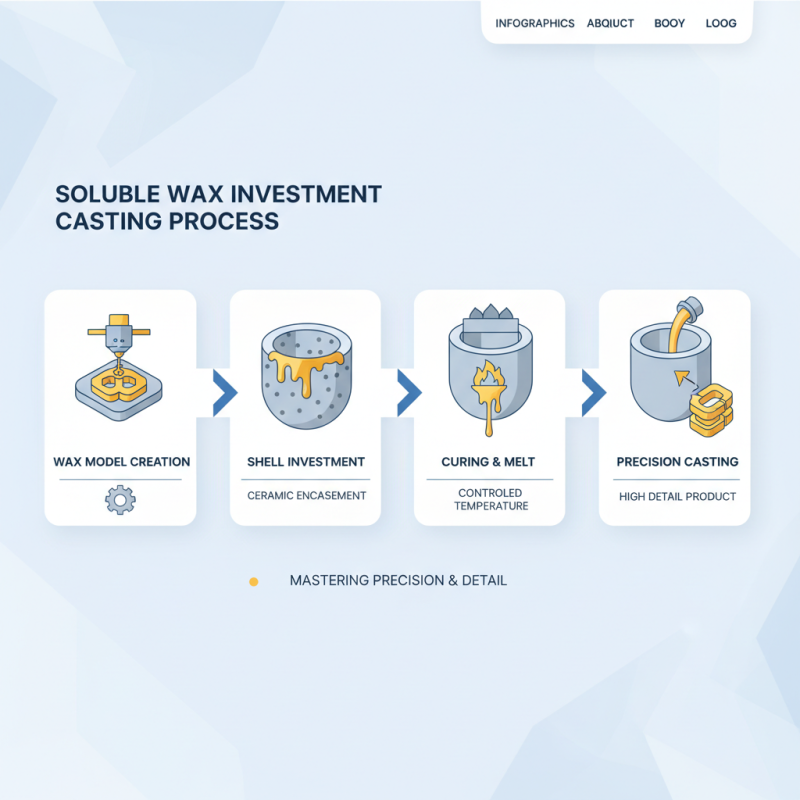
The process begins with creating a wax pattern. This pattern is coated with a ceramic shell. After the shell cures, the wax is melted and drained. There can be challenges in achieving a flawless finish. Air bubbles or shell cracks may occur, impacting the final output. Regular quality checks during each stage can mitigate these issues.
Tips: Test various wax compositions during the early stages. Different formulations can affect the casting's strength and detail.
Finally, post-casting treatments are essential. These processes can also reveal defects that might have gone unnoticed. Identifying and addressing these imperfections early can improve overall production quality. Stay adaptable; processes may require adjustments based on initial findings.
Essential Materials for Soluble Wax Investment Casting Techniques
In soluble wax investment casting, the choice of materials is crucial. Soluble wax serves as the primary medium. This wax is special; it melts away easily to reveal the final mold. Choosing high-quality wax is essential for smooth operation. A low-grade wax can cause issues, like uneven molds or residue.
Beyond wax, you need a precision ceramic shell. This shell must withstand high temperatures. It should be strong yet able to expand slightly during the heating process. A brittle shell can crack, leading to failed casts. Look for options that offer flexibility while maintaining strength.
Finally, additives can enhance performance. They improve the melting process and reduce impurities. Using the wrong mix can result in defects. Experimentation is key. Testing different materials and combinations will lead to better results. This crafting process calls for patience and constant adjustments. Mistakes along the way teach valuable lessons. Embrace the challenges, and refine your technique.
2026 How to Master Soluble Wax Investment Casting Techniques? - Essential Materials for Soluble Wax Investment Casting Techniques
| Material Type |
Properties |
Usage in Casting |
Benefits |
| Soluble Wax |
High melting point, water-soluble |
Pattern creation and mold making |
Easy to remove, leaves smooth surfaces |
| Investment Materials |
Heat resistant, fine particle size |
Shell building and support for casting |
Generates precise details, smooth finish |
| Refractory Coatings |
High thermal stability |
Outer layer for heat resistance |
Prevents deformation during casting |
| Binding Agents |
Adhesive properties, thermal stability |
Strengthens the mold structure |
Enhances mold durability |
| Solvents |
Fast-evaporating, low toxicity |
Cleaning and preparation of materials |
Ensures clean working conditions |
Step-by-Step Process of Soluble Wax Investment Casting
Mastering soluble wax investment casting techniques requires understanding its intricate processes. This method allows for high precision and detail in casting. It begins with creating a model using soluble wax. The model is then encased in a ceramic shell, which will later form the cavity for the final product. Careful attention to temperature during shell curing is crucial. If not managed properly, it can lead to defects.
After the shell hardens, the wax is melted away, leaving a cavity. This step can be challenging; sometimes, residual wax remains. Hot water can help eliminate stubborn wax scraps. Once the cavity is clear, molten metal is poured in. Here, timing is vital; delays can lead to defects in the final piece. Cooling rates also impact the final quality, requiring ongoing observation throughout the process.
The next phase involves breaking away the ceramic shell. It's a moment of truth, as cracks or chips may appear. Each cast presents learning opportunities; not every attempt will succeed. Reflection is key, as one must analyze what went wrong in each iteration. Adjustments to wax composition or shell thickness can be necessary. The path to mastering this technique is filled with challenges, but each step builds essential skills for success.
Common Challenges and Solutions in Soluble Wax Investment Casting
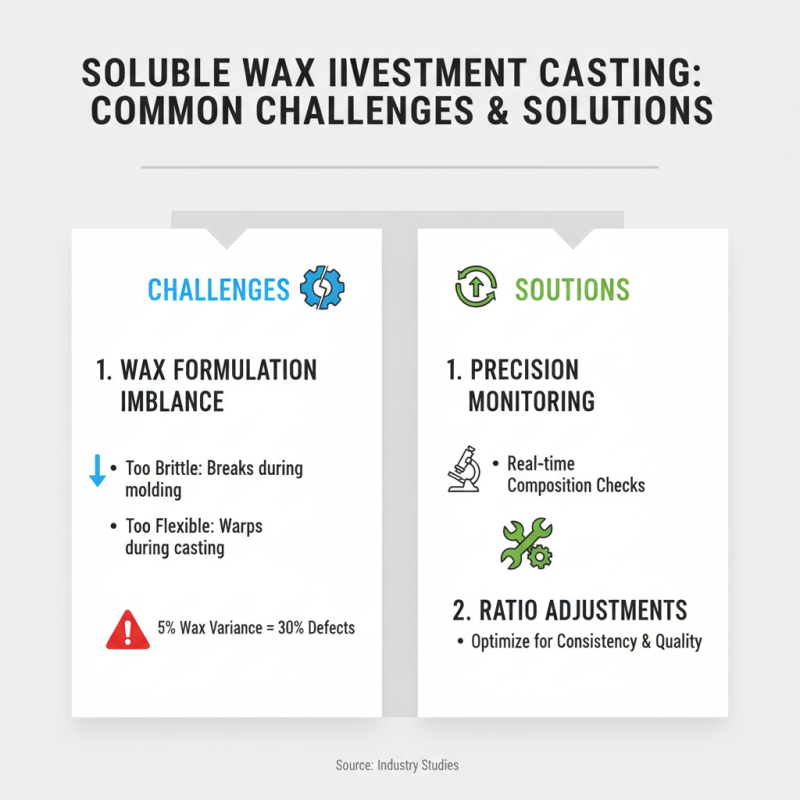
Soluble wax investment casting presents unique challenges. One prominent issue is achieving the right balance in the wax formulation. Too brittle, and it breaks during the mold-making process; too flexible, and it warps during casting. Industry studies show that a 5% variance in wax composition can lead to a 30% increase in defects. Monitoring and adjusting these ratios is crucial for consistent quality.
Another common obstacle involves the burnout process. Incomplete removal of the wax can lead to contamination. A recent report indicated that 12% of castings failed due to residual wax. Continuous improvement in the heating cycle is vital. An optimized ramp rate helps ensure thorough burnout. Many have shared that a controlled, gradual increase in temperature reduces these issues noticeably.
Furthermore, maintaining a clean and controlled environment during the entire casting process cannot be overstated. Dust and moisture can compromise the result. Some practitioners overlook this, leading to costly errors. Regular training and audits can mitigate these risks. Each layer of control enhances overall outcomes, but vigilance is always needed.
Advancements and Innovations in Soluble Wax Investment Casting Methods
The world of soluble wax investment casting is rapidly evolving. New techniques and materials are emerging, making the process more efficient. Innovations in soluble wax formulations lead to better flow and detail. This enhances the overall quality of the cast parts. The methods now allow for finer details and complex geometries.
Consider these tips when diving into this field. Start with small projects to grasp the basics. Experiment with different wax compositions. Understand how they react under various conditions. This exploration can uncover new efficiencies. Keep detailed records of each attempt. Not everything will work perfectly. Learning from failures leads to improvement.
Incorporating advanced technologies can also help. Digital design tools enable precise modeling. 3D printing aids in creating intricate patterns. Yet, not all technologies align with soluble wax. Some tools may complicate the process. Therefore, assess each technology's fit for your specific needs. Adjust and adapt your techniques to find the optimal blend.
Advancements in Soluble Wax Investment Casting Techniques (2026)