What is Lost Wax Investment Casting and How Does It Work?
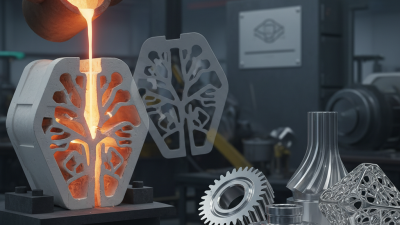
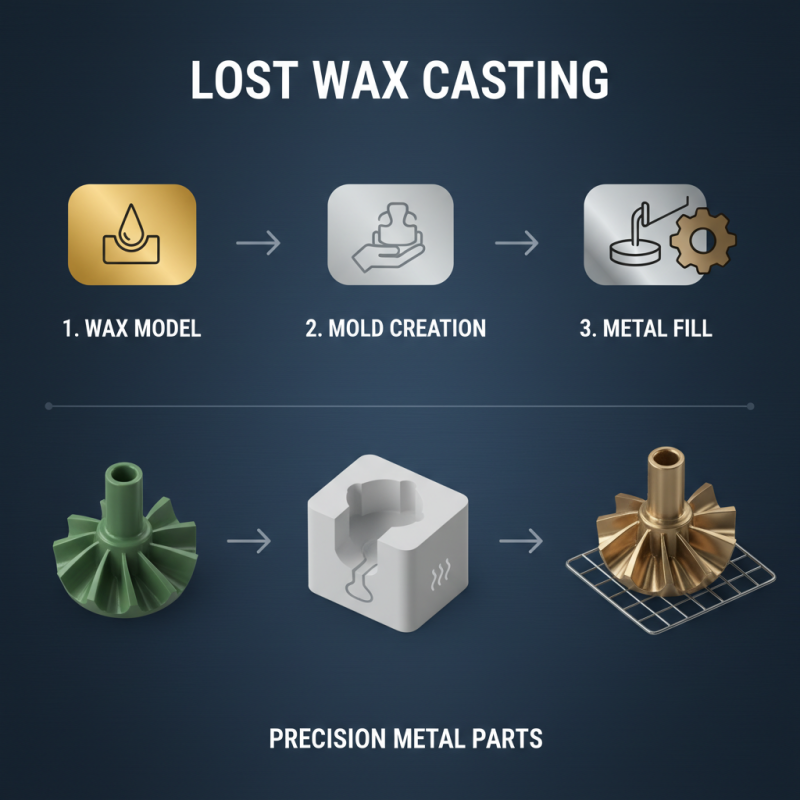
Lost Wax Investment Casting is a fascinating method used for producing intricate metal parts. In this process, a wax model is crafted first. This model represents the desired final product. Afterward, it is coated with a ceramic shell. Once the shell hardens, the wax is melted away. This leaves a precise cavity that shapes the molten metal.
The beauty of Lost Wax Investment Casting lies in its detail. It allows for fine features and complex designs. Many industries, from jewelry to aerospace, rely on this technique. However, producing a flawless mold is challenging. Even the smallest imperfections can affect the final piece. This highlights the need for careful execution throughout the process. Sometimes, a small error in the wax can lead to expensive revisions.
Despite its complexities, Lost Wax Investment Casting offers unmatched versatility. It can handle various metals and sizes. As technology advances, this ancient technique continues to evolve. Yet, the principles remain the same. Understanding these principles is essential for anyone interested in metal casting. The journey from wax to metal is not just a transformation; it’s an art.
What is Lost Wax Investment Casting: An Overview of the Process
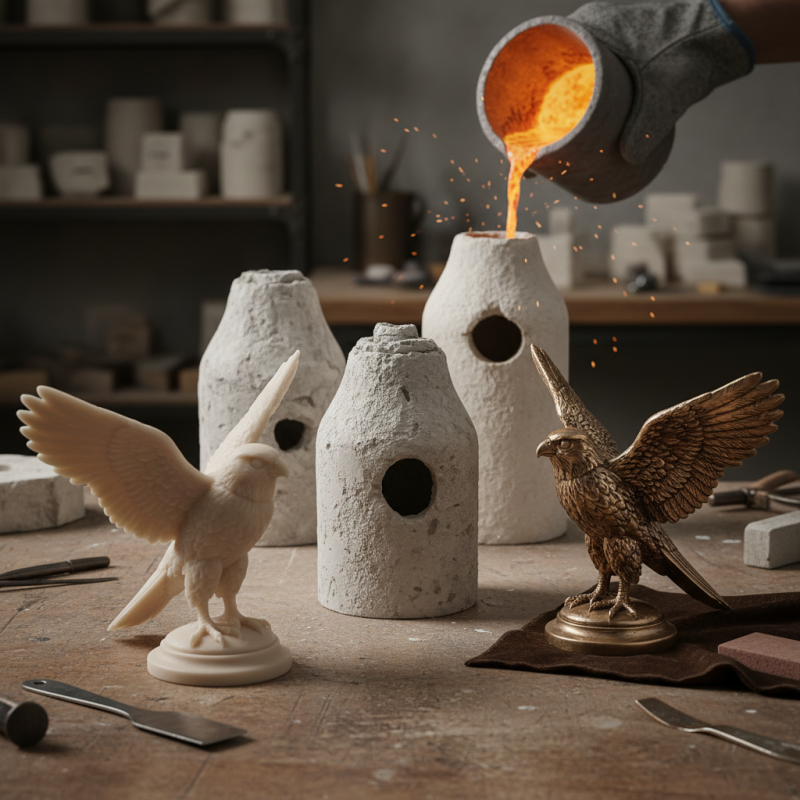
Lost wax investment casting is a fascinating process that has been used for centuries. This method begins with creating a wax model of the desired object. Once the model is complete, it is coated with a ceramic shell. This shell is then heated to melt away the wax, leaving a mold for the metal.
Tips for success: Ensure your wax model has the right details. Small imperfections can lead to defects in the final product. The temperature during the shell creation must be carefully monitored. Too hot or too cool can compromise the mold's integrity.
Once the mold is ready, molten metal is poured in. The casting process requires precision. The cooling time depends on the type of metal used. Timing is crucial to avoid cracking or distortion. Unexpected results can happen, especially in intricate designs.
Tips for troubleshooting: Always check the mold for any defects before pouring. If the casting doesn’t come out as expected, review your shell thickness. Adjust the pouring speed to minimize air bubbles. Small adjustments can lead to significant improvements.
Lost Wax Investment Casting: Material Usage Overview
This chart illustrates the distribution of different materials used in the lost wax investment casting process.
Historical Background of Lost Wax Investment Casting Techniques
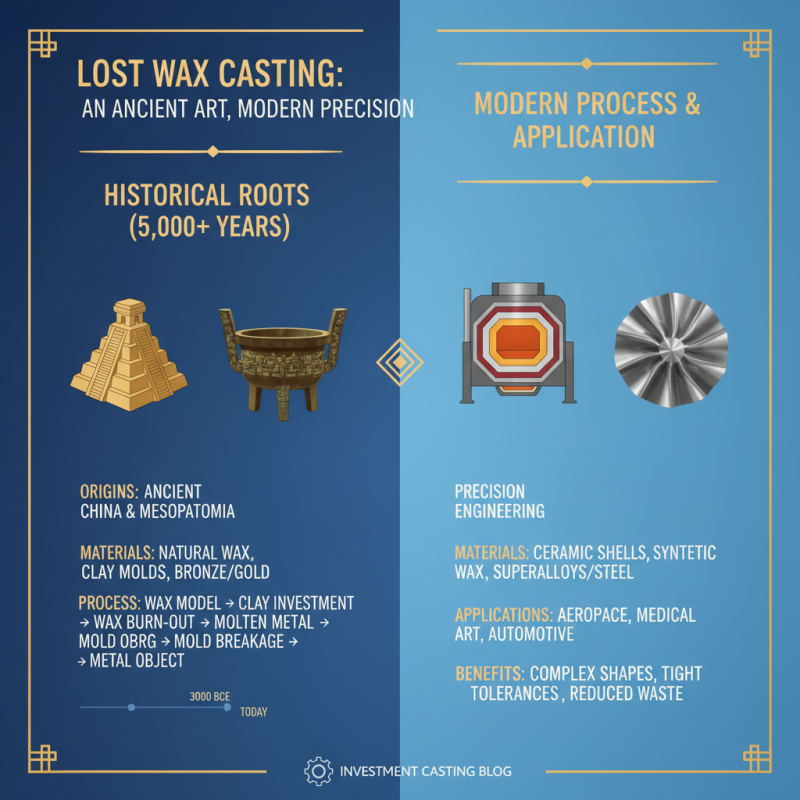
Lost wax investment casting, known for its precision, has a rich historical background. This technique can be traced back over 5,000 years to ancient civilizations such as China and Mesopotamia. Artisans used natural wax to create intricate designs. After solidifying, they burned away the wax to leave behind detailed molds for metal casting.
Throughout history, many cultures refined this process. In India, artisans produced exquisite jewelry using lost wax techniques. Reports indicate that 18% of jewelry production still uses this method today. The Ancient Greeks also adopted it, creating iconic statues that showcased their craftsmanship. These historical examples illustrate the enduring significance of this casting method.
Today, lost wax investment casting remains relevant across industries. According to industry studies, the market for investment casting is expected to reach $21 billion by 2028. Yet, challenges in achieving consistent quality still exist. Some manufacturers struggle with defects in the final product. This highlights the need for ongoing research and advancements in casting technologies.
Key Materials Used in Lost Wax Investment Casting: Wax, Metal, and Molds
Lost wax investment casting is a precise method for creating metal parts. This technique involves three main materials: wax, metal, and molds. Wax is used to create the initial design. Molds are shaped around the wax form, which later melts away. Finally, molten metal fills the void left by the wax. The result is a detailed and accurate replica of the original model.
The choice of materials significantly impacts the casting process. High-temperature waxes provide excellent dimensional stability. Metal choices often include stainless steel, aluminum, and bronze, each offering unique properties. According to reports, the global investment casting market was valued at approximately $14.82 billion in 2021. It is projected to reach $20.12 billion by 2028. The growth highlights the importance of material selection in this industry.
Tips: Always test your wax source for melting point consistency. This can influence your overall cast quality. Keep in mind that mold materials also affect the final product. For high fidelity, invest in quality molds to ensure every detail is captured. Mistakes can happen, so review your setup regularly. Small adjustments can lead to significant improvements in results.
The Step-by-Step Process of Lost Wax Investment Casting Explained
Lost Wax Investment Casting is a fascinating process. It begins with creating a wax model. This model is an exact replica of the final product. The next step involves coating the model with a ceramic shell. This layer allows for precise details to be captured. Once the shell hardens, the wax is melted away. The process leaves behind a hollow ceramic mold. It's crucial that the mold is strong and free from cracks.
After the wax is removed, molten metal is poured into the mold. Temperature control is vital here. If the metal is too hot or too cold, defects may arise. Once the metal cools and solidifies, the ceramic shell is broken away. This reveals the final casting. The finished piece may have imperfections. These can be fixed, but it requires skill. Attention to detail is essential in this process. Each stage demands precision, and a single flaw can impact the entire outcome.
Lost Wax Investment Casting has its challenges. The process can be time-consuming, and variations may occur with each casting. It's not always easy to achieve the desired results. Learning from mistakes is part of the journey. The technique has a rich history, and continually evolving practices offer potential for improvement. Embracing imperfection may lead to unexpected innovation.
Applications and Advantages of Lost Wax Investment Casting in Industries
Lost wax investment casting, also known as precision casting, offers remarkable advantages across various industries. Its precision allows for the production of intricate designs. This method is ideal for creating complex shapes that traditional casting methods struggle with. Industries use it widely for making parts that require high tolerances. For example, aerospace components often rely on this technique due to strict safety standards.
In addition to aerospace, the medical sector benefits greatly. Surgical instruments and implants often involve lost wax investment casting for their accuracy and strength. The finished products often require minimal finishing, saving time and resources. However, the process also has limitations. It can be expensive for small-scale production runs. Additionally, achieving perfect molds can be challenging, sometimes leading to defects. Still, the precision gained is invaluable in many cases, making it a preferred choice despite its drawbacks.