Why is Investment Casting Important for Modern Manufacturing?
Investment casting plays a vital role in modern manufacturing. As expert Michael Johnson, a leading figure in the investment casting industry, once stated, "Investment casting is the backbone of precision engineering." This technique allows manufacturers to produce complex shapes with high precision and minimal waste.
In industries like aerospace and automotive, investment casting offers unmatched detail and consistency. Components made with this method often have superior mechanical properties. Yet, the process can be challenging. It requires meticulous planning and quality control. One small mistake can lead to a significant loss in time and resources.
Despite its importance, not all manufacturers utilize investment casting effectively. Some overlook the learning curve involved. As a result, they miss out on its benefits. It's crucial for companies to invest in understanding this technique fully. By doing so, they can leverage investment casting to enhance their production capabilities.
Importance of Precision in Investment Casting for Manufacturing
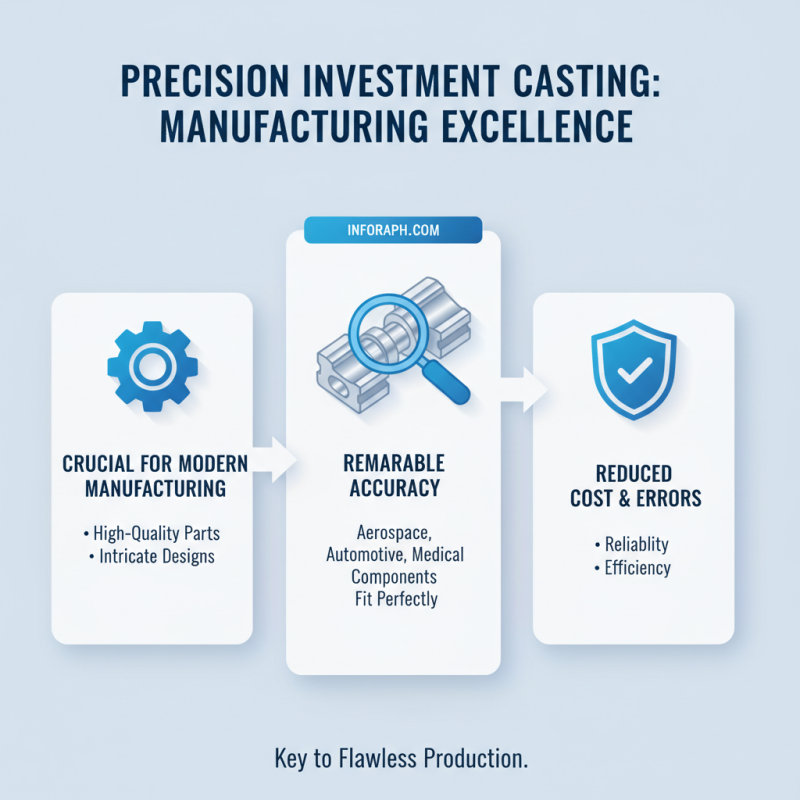
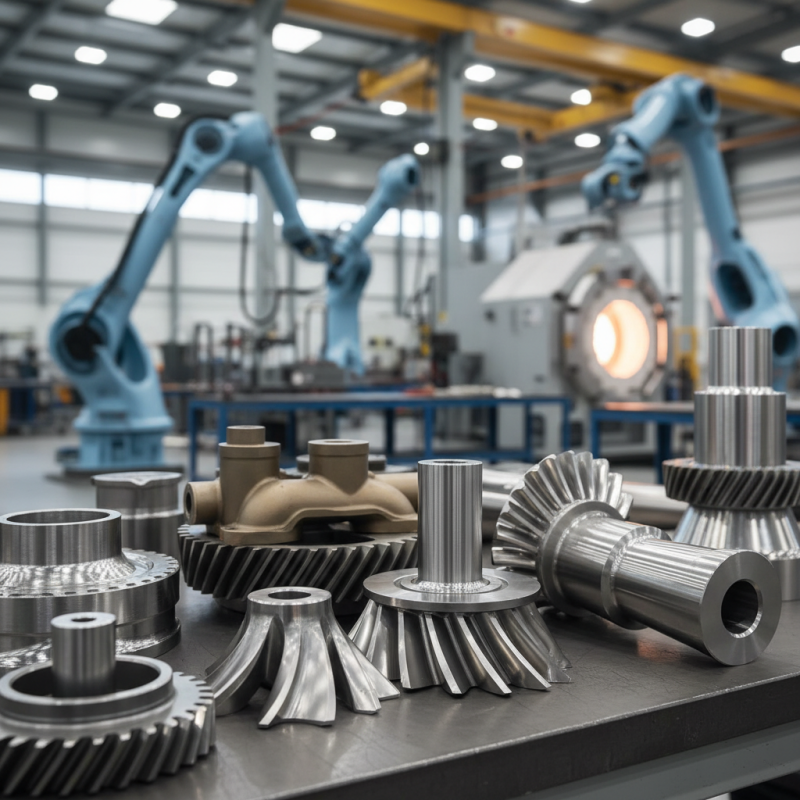
Investment casting plays a crucial role in modern manufacturing. The process allows for remarkable precision, which is essential in many industries. High-quality parts can be produced with intricate designs, a critical requirement for aerospace, automotive, and medical fields. Precision in investment casting ensures that each component fits perfectly, reducing the chances of costly errors.
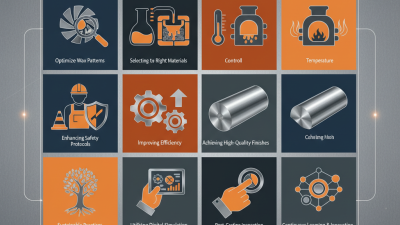
Achieving this level of precision requires careful attention to detail. The wax pattern, materials used, and mold making must be meticulously planned. Any small error in these stages can lead to defects in the final product. Mistakes might happen. It's important to analyze each step, understanding that even minor flaws can have significant repercussions.
The process is not without challenges. Temperature control during pouring is vital. If not managed, it can lead to imperfections. Artisans must remain vigilant, adapting techniques as needed. This is where the human element provides unique insights. The synergy between technology and skilled craftsmanship is essential for achieving desired precision. Continuous learning and refinement are crucial.
Key Benefits of Investment Casting in Modern Industries
Investment casting plays a vital role in modern manufacturing. It allows for intricate designs and precise detailing. Many industries benefit from its unique advantages. Aerospace, automotive, and medical sectors rely heavily on this method. The ability to create complex shapes reduces the need for additional machining. Each component is crafted with high accuracy.
One clear benefit is the reduced material waste. Traditional methods often involve excess material removal. Investment casting minimizes this issue. However, the process can be time-consuming. Waiting for molds to cool takes patience. Additionally, quality control is critical. Minor defects can lead to major failures. Industries must ensure rigorous testing.
Investment casting also promotes innovation. New materials can be used, fostering novel designs. This flexibility can sometimes lead to unexpected challenges. Experimentation might lead to failures. Yet, these experiences drive progress and improvement. The method opens doors to previously unimagined possibilities. Yet, it requires careful consideration of costs and timelines. Overall, while investment casting has its imperfections, its importance remains undeniable.
Key Benefits of Investment Casting in Modern Industries
Applications of Investment Casting Across Various Sectors
Investment casting plays a vital role in modern manufacturing, impacting various sectors. It is often preferred for producing intricate parts with high precision. Industries like aerospace, automotive, and medical highly value this method. According to a recent report by MarketsandMarkets, the global investment casting market is forecasted to reach $27.4 billion by 2027, reflecting its growing importance.
In the aerospace sector, investment casting allows for lightweight designs without compromising strength. Components like turbine blades are often made using this technique. The medical industry benefits from custom implants created to fit individual patients precisely. These applications demonstrate the versatility of investment casting across diverse needs.
Tips: When considering investment casting, focus on design simplicity. Complicated designs can lead to higher costs. Always evaluate material selection to optimize performance. Imperfections in initial designs may cause issues downstream. Continuous improvement is crucial for efficient production.
Why is Investment Casting Important for Modern Manufacturing? - Applications of Investment Casting Across Various Sectors
| Sector |
Application |
Benefits |
| Aerospace |
Engine components, turbine blades |
High precision, lightweight design |
| Automotive |
Transmission parts, exhaust systems |
Reduced weight, improved fuel efficiency |
| Medical |
Surgical instruments, implants |
Superior surface finish, biocompatibility |
| Energy |
Components for turbines, pumps |
Durability, efficiency in energy production |
| Industrial |
Machinery parts, tools |
Versatility, cost-effectiveness |
Comparative Analysis: Investment Casting vs. Other Manufacturing Methods
Investment casting is a unique method in modern manufacturing. It allows for intricate designs and fine details. This process utilizes wax patterns, which are coated with ceramic material. Once heated, the wax melts away, leaving a precise mold. This technique contrasts sharply with sand casting or machining methods. These alternatives often suffer from limitations in complexity and surface finish.
One notable aspect of investment casting is its ability to produce complex geometries. Other methods may require additional machining. This can increase costs and time. Investment casting reduces material waste significantly. It creates near-net shapes, conserving resources. However, the initial setup costs can be high. Companies must weigh the investment against long-term benefits.
Tip: Consider the part’s complexity when choosing a method. Simple designs may not benefit from investment casting.
While investment casting has many advantages, it is not universally applicable. Each project demands careful analysis. For smaller runs, traditional methods might be sufficient. Assess material compatibility, tolerances, and production volume before deciding.
Tip: Always evaluate long-term production needs. This can impact the overall choice of manufacturing method.