Choosing a top China Precision Metal Casting supplier requires more than comparing unit prices. The decision affects dimensional accuracy, product reliability, delivery stability, and long-term production risk. The World Foundry Organization’s World Casting Census reports that global foundry output exceeds 100 million tonnes annually. This scale shows the industry’s importance, but it also reveals a challenge: capacity does not always mean capability.
Grand View Research identifies steady growth in the global metal casting market, driven by automotive, aerospace, energy, and industrial equipment demand. However, market forecasts do not evaluate an individual supplier’s mold design, alloy control, or inspection discipline. Buyers must examine these details directly. Look for documented ISO 9001 systems, material certificates, CMM inspection records, and traceable batch controls. A polished factory tour is not enough.
Ask for evidence.
Dr. Diran Apelian, a widely recognized casting researcher, has described casting as “the original net-shape manufacturing process.” His observation remains relevant when selecting Chinese manufacturers. Precision Metal Casting can reduce machining, material waste, and assembly steps, but only when process engineering is controlled from simulation through final inspection. Request filling and solidification simulations, sample reports, and corrective-action records. Review rejected parts, not only successful samples.
A reliable supplier should explain alloy selection, tooling life, tolerance limits, surface treatment, and export packaging in clear language. The best partner may not offer the lowest quotation. That is uncomfortable, but realistic. Some buyers also overlook communication speed and engineering ownership. These weaknesses can become expensive after mass production begins. This guide evaluates China’s leading suppliers through technical evidence, manufacturing experience, quality authority, and verifiable customer support. Mistakes are still possible. Careful questioning reduces them.
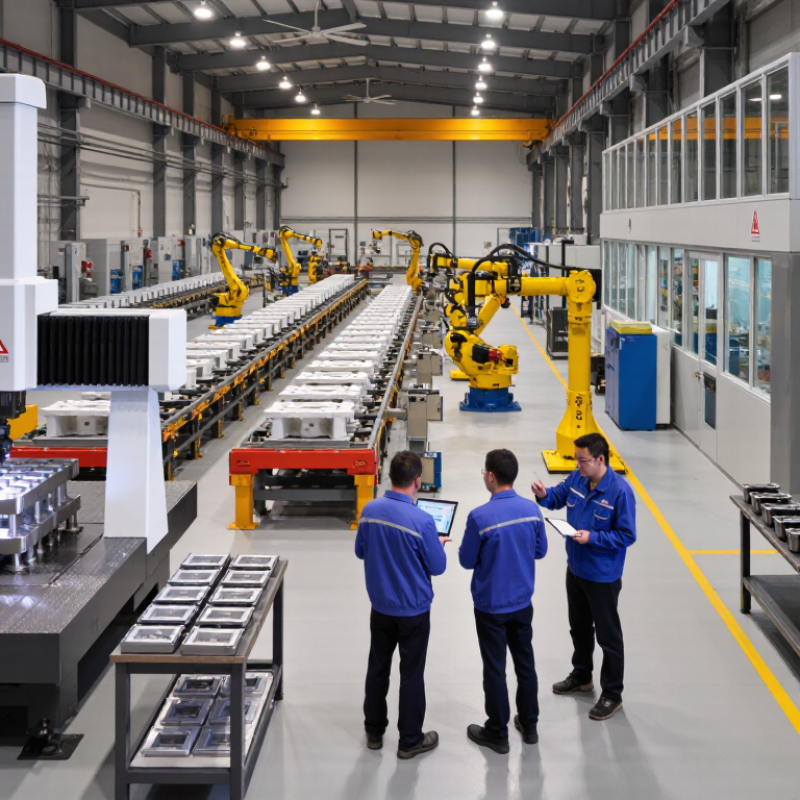
Precision metal casting creates near-net-shape metal parts with controlled dimensions and fine surface details. Investment casting is common for complex geometries, thin walls, and reduced machining allowances. The process may use stainless steel, aluminum alloys, carbon steel, or other qualified materials. Precision does not mean “perfect.” It means meeting defined tolerances repeatedly.
Supplier evaluation should begin with technical evidence, not attractive photos. Request process flow charts, material certificates, inspection records, and sample reports. Check whether the factory uses calibrated CMM equipment, spectrometers, gauges, and documented inspection plans. Ask how wax patterns, ceramic shells, melting temperatures, and heat treatment are controlled. Small process changes can affect shrinkage and final dimensions.
A capable supplier should explain design risks before production. Their engineers should review wall thickness, draft angles, machining references, and tolerance priorities. Visit the facility when possible. Observe furnace areas, clean inspection rooms, worker training, and batch traceability. Ask for recent examples with similar alloys and dimensions. Delivery history, corrective-action records, communication speed, and capacity also matter.
A low quotation can hide weak controls or repeated rework. I have found that some audits look impressive but reveal little about daily discipline. This is where evaluation becomes difficult. Verify the details.
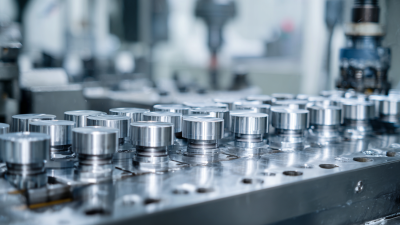
Choosing among China’s precision metal casting supplier types starts with process fit, not search ranking. The World Foundry Organization’s 2023 Census reported that China produced about 51.9 million tonnes of castings in 2022, nearly half of global output. This scale creates distinct supplier groups. Large integrated foundries offer melting, shell building, heat treatment, machining, and inspection under one roof. Specialized investment-casting houses may provide tighter control for complex geometries, medical instruments, and small stainless-steel parts. Capacity matters.
Machining-integrated suppliers suit buyers needing finished components, serialized inspection, and fewer handoffs. Smaller engineering foundries can respond faster to prototypes and low-volume revisions, but their process records may be thinner. Trading companies can coordinate factories, yet buyers should confirm tooling ownership, nonconformance decisions, and final release responsibility. Ask for furnace logs, material certificates, CMM reports, and sample traceability. A polished website is not proof.
The ISO Survey 2022 recorded 426,716 ISO 9001 certificates in China across all industries; certification alone does not validate casting capability. Check the certificate scope, audit date, and actual plant location. Request a live video walkthrough of wax injection, shell drying, pouring, and CT or radiographic inspection.
For approval, compare dimensional capability, yield, repair rate, and delivery performance across several lots. Do not rely on one perfect sample. Test a difficult feature, such as a 1.5-millimeter wall or deep internal passage, before signing volume terms. Some suppliers may resist this step. That hesitation deserves a second look.
Choosing a Chinese precision metal casting supplier starts with manufacturing capability, not a polished website. Ask how the foundry controls wax patterns, shell building, melting, heat treatment, and machining. Request machine lists, alloy ranges, size limits, tolerance records, and recent sample reports. A capable supplier should explain its process using measured details. For example, ask how it checks a 0.05 mm critical dimension after machining. Vague answers deserve a pause. Small details matter.
Quality systems reveal whether good samples can become consistent production. Look for incoming material inspection, furnace temperature records, lot traceability, calibrated gauges, and documented corrective actions. Request a sample control plan and inspection report, then compare them with your drawing requirements.
Coordinate measuring machines, spectrometers, and surface roughness testers can support reliable evidence. Yet equipment alone proves little. Operators must follow procedures, and records must be complete, readable, and linked to each batch.
Review certifications carefully. Confirm the standard, certificate scope, issuing body, site address, and expiry date. A quality certificate covering machining may not cover casting operations. Ask whether external laboratories calibrate key instruments and whether nonconforming parts are isolated.
A remote audit can help, but an on-site visit often exposes workflow gaps. I would also place a small trial order before approving regular supply. Some evaluations overvalue paperwork. That is a mistake worth admitting. Delivery discipline, dimensional stability, and communication during problems deserve equal attention.
How to Choose China Top Precision Metal Casting Suppliers?
Choosing a precision metal casting supplier in China requires more than comparing the lowest quotation. Price should be separated into tooling, casting, machining, surface treatment, inspection, packaging, and freight. Ask for a line-item quote. An unusually low figure may exclude testing or mold maintenance. Request sample reports, tolerance records, and material certificates before approving production. These documents show whether the supplier understands engineering control, not merely sales language.
Lead time deserves the same careful breakdown. Separate pattern or tooling time from first-article production and recurring batch delivery. Confirm the approval point, inspection window, shipping method, and buffer for rework. A supplier promising ten days may mean ten days after final drawing approval. That difference matters when a machine waits for castings. Communication is easier to judge through a technical call. Ask who handles revisions, dimensional questions, and urgent defects. Clear replies with marked drawings are stronger evidence than fast promises. Still, even good communication can fail when responsibilities remain vague.
Customization should be tested with a real component, not a polished capability list. Share a drawing with wall thickness changes, tight holes, and difficult angles. Ask how the team will control shrinkage, porosity, machining allowance, and fixture access. Experienced engineers may suggest a small design change that reduces scrap. That advice is valuable, though it can challenge your original design. Request a prototype or a limited pilot batch. Measure critical features yourself when possible. One uncomfortable lesson remains: a perfect sample does not guarantee stable volume production. Review corrective-action records and agree on measurable acceptance criteria.
Comparison of pricing, lead times, communication, and customization services
This anonymous benchmark uses a 0–100 scoring model based on common China precision casting sourcing criteria. A higher score indicates better overall performance: lower indicative pricing, shorter and more reliable lead times, faster communication, and stronger customization support. Typical reference conditions include prototype quantities of 10–50 pieces, production orders of 500–5,000 pieces, 7–15 day sampling, 25–45 day production, and initial response times of 4–24 hours.
Choosing a Chinese precision metal casting supplier should begin with evidence, not a polished website. Request samples using the same alloy, tooling route, and tolerance range planned for production. Measure dimensions independently. Record porosity, surface finish, hardness, and machining allowance. A display sample proves little. Ask for traceability, including heat numbers, inspection dates, equipment, and operator sign-off.
Audit the process before placing a large order. Review calibration records, nonconformance logs, corrective actions, furnace controls, and subcontracted processes. The ISO Survey 2022 recorded 1,265,216 ISO 9001 certificates worldwide. Certification alone does not prove casting capability. Check whether procedures operate on the shop floor. The World Casting Census has repeatedly identified China as the largest casting-producing country by volume. Scale helps, yet it can conceal inconsistent control. That risk is easy to miss.
Use a contract with measurable acceptance rules. Specify alloy standards, dimensional tolerances, sampling plans, defect limits, packaging, change approval, and corrective-action timing. Require material certificates and retained samples for every batch. Include independent inspection rights and clear remedies for rejected parts. State who owns tooling and how revisions receive approval. Shipping terms, payment milestones, confidentiality, and dispute procedures also matter. A vague promise of “zero defects” is weak protection.
| Supplier ID | Process Capability | Sample Material | Dimensional Accuracy | Surface Roughness (Ra, μm) |
Sample Acceptance (First Article) |
Porosity Result | Process Capability (Cpk) |
Quality Audit Score / 100 |
Traceability Records | On-Time Delivery History |
Contract Protection | Overall Verification |
|---|---|---|---|---|---|---|---|---|---|---|---|---|
| Supplier 01 | Investment casting; 5-axis CNC finishing |
17-4 PH stainless steel; ASTM A747 equivalent |
±0.05 mm on critical dimensions | 1.6 | 98% of inspected features within drawing tolerance | No rejectable indications in X-ray sample set | 1.67 | 92 | Heat number, batch ID, inspection report, material certificate | 96% over the reviewed 12-month period | Clear acceptance criteria, tooling ownership, 8D response clause | Approved for pilot order |
| Supplier 02 | Lost-wax casting; 3-axis and 4-axis CNC finishing |
316L stainless steel; ASTM A351 equivalent |
±0.08 mm on critical dimensions | 3.2 | 94% of inspected features within drawing tolerance | Minor isolated shrinkage; below agreed rejection threshold | 1.42 | 86 | Heat number and batch records available; operator sign-off incomplete | 91% over the reviewed 12-month period | Basic warranty and inspection terms; limited corrective-action timing | Conditional approval |
| Supplier 03 | Sand casting; conventional CNC machining |
Aluminum alloy A356; ASTM B26 equivalent |
±0.15 mm on critical dimensions | 6.3 | 89% of inspected features within drawing tolerance | Porosity detected near one non-critical machining allowance | 1.18 | 78 | Batch records available; incomplete furnace temperature logs | 87% over the reviewed 12-month period | Purchase-order terms only; no defined escalation procedure | Use only after corrective action |
| Supplier 04 | Investment casting; 3-axis CNC finishing |
Carbon steel; ASTM A216 equivalent |
±0.10 mm on critical dimensions | 3.2 | 92% of inspected features within drawing tolerance | No visible cracks; limited NDT coverage documented | 1.34 | 82 | Material certificates provided; casting route traceability partial | 89% over the reviewed 12-month period | Defined replacement terms; no formal late-delivery penalty | Approve with inspection hold points |
| Supplier 05 | High-pressure die casting; 5-axis CNC finishing |
Aluminum alloy ADC12; JIS H5302 equivalent |
±0.06 mm on critical dimensions | 1.6 | 97% of inspected features within drawing tolerance | Gas porosity detected in two non-machined areas | 1.51 | 88 | Die, lot, operator, and inspection records maintained | 94% over the reviewed 12-month period | Tooling maintenance schedule and replacement terms included | Approved for controlled production |
| Supplier 06 | Investment casting; 4-axis CNC finishing |
Duplex stainless steel; ASTM A995 equivalent |
±0.12 mm on critical dimensions | 3.2 | 84% of inspected features within drawing tolerance | Linear indication found during penetrant testing | 0.96 | 69 | Material certificates available; inconsistent lot identification | 82% over the reviewed 12-month period | Contract lacks measurable quality targets and audit access | Hold pending requalification |