Top Advantages of Stainless Steel Precision Casting for Your Projects
In the realm of modern manufacturing, Stainless Steel Precision Casting stands out. Industry expert John Doe, known for his innovations, once stated, "This method opens doors to unparalleled design possibilities." This technique allows for intricate designs, aimed at specific project demands.
Many industries benefit from Stainless Steel Precision Casting. Its durability and resistance to corrosion make it a preferred choice. However, some still question its cost-effectiveness. It's essential to weigh advantages against production costs carefully.
As projects evolve, so do the needs of businesses. Flexibility and precision become vital. While Stainless Steel Precision Casting offers remarkable benefits, it is crucial to understand potential limitations. This exploration of advantages may spark further thoughts on its suitability for diverse applications.
Top Advantages of Stainless Steel Precision Casting for Your Projects
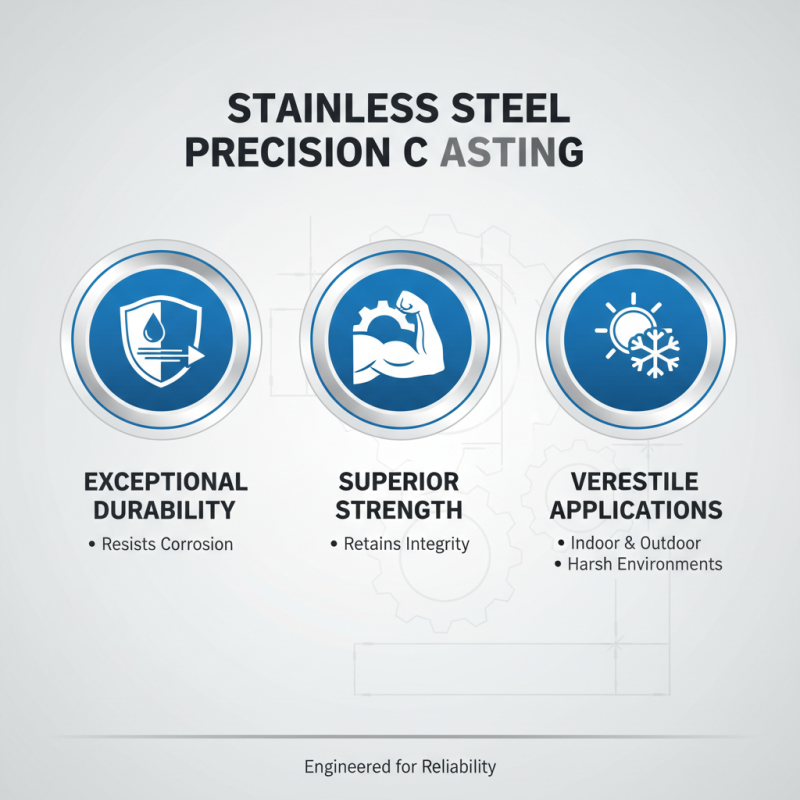
Stainless steel precision casting offers numerous benefits for various projects. One major advantage is its exceptional durability. Unlike other materials, stainless steel resists corrosion and retains its strength over time. This makes it suitable for both indoor and outdoor applications. Engineers often favor it for components exposed to harsh environments.
Another significant benefit is design flexibility. Precision casting allows for intricate shapes and detailed features. This process reduces the need for extensive machining, saving time and resources. However, achieving the desired level of precision can be challenging. Sometimes, minor defects can occur during casting. It is crucial to evaluate and improve the casting process continually.
Cost-effectiveness is also an important factor. While the initial investment can be higher, the long-term savings are noteworthy. Stainless steel’s longevity reduces replacement needs. Additionally, it’s often lighter than other materials, which can lower shipping costs. Yet, project managers must consider the overall lifecycle and not just the upfront price. Taking a holistic approach ensures better project outcomes.
Understanding the Process of Stainless Steel Precision Casting
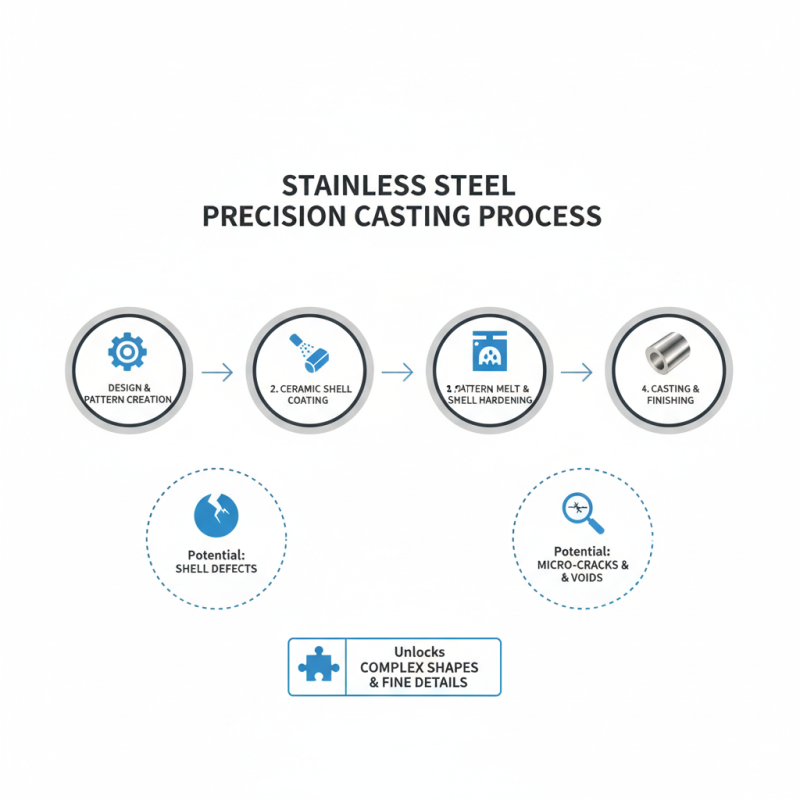
The process of stainless steel precision casting is intricate and fascinating. First, a pattern is created from the desired design. This pattern is coated with a ceramic shell, which hardens over time. The pattern is then melted away, leaving a hollow shell. This method allows for complex shapes and fine details. Small defects can occur during this step, affecting the final product.
Once the shell is prepared, molten stainless steel is poured into it. This requires careful temperature control. If the steel is too hot or cool, the casting won't form properly. Sometimes, issues arise with air pockets. These can weaken the structure and lead to failures. Observing this process closely helps to minimize problems.
After cooling, the shell is broken away to reveal the cast component. Further finishing processes may include grinding and polishing. Even then, imperfections can slip through unnoticed. Continuous monitoring and adjustments are essential for achieving high quality. Understanding each step of the process can lead to better outcomes in stainless steel precision casting.
Key Benefits of Using Stainless Steel in Precision Casting
Stainless steel precision casting offers notable advantages for various projects. A key benefit is its exceptional corrosion resistance. This makes it ideal for components exposed to harsh environments. For instance, marine applications often require materials that can withstand saltwater. Stainless steel fits this need perfectly.
Another benefit is its strength-to-weight ratio. Parts made from stainless steel are often lighter yet stronger than alternatives. This can lead to more efficient designs and reduced material costs. However, the initial investment in stainless steel casting can be higher. Consider whether the long-term benefits justify this cost.
Tips: Always assess the specific material requirements of your project. Testing prototypes can reveal if stainless steel truly meets your needs. Keep in mind, surface finishing may be required to achieve desired aesthetics. This can add to the project timeline.
Applications and Industries Benefiting from Stainless Steel Casting
Stainless steel precision casting finds its way into various industries. One notable application is in the aerospace sector. Components crafted from stainless steel ensure strength and durability. They can withstand extreme conditions. Such attributes are vital for aircraft safety.
Another area that benefits is the automotive industry. Stainless steel parts are used in engines and exhaust systems. These parts must resist corrosion and high temperatures. Precision casting allows manufacturers to create complex designs. This precision leads to better performance and efficiency, though challenges persist in achieving uniform quality.
The construction industry also relies on stainless steel casting. Components like beams and fittings are crucial in modern architecture. They provide strength and aesthetic appeal. However, achieving the desired finish can be tricky. Unforeseen defects sometimes occur. Continuous improvement is needed to enhance the casting process.
Top Advantages of Stainless Steel Precision Casting in Various Industries
Comparative Analysis: Stainless Steel vs Other Materials in Casting
Stainless steel precision casting stands out when compared to other materials. It offers superior strength and durability. When subjected to harsh environmental conditions, stainless steel maintains its integrity. Steel components resist corrosion better than many aluminum or bronze options. This quality is crucial for outdoor applications or in chemical industries.
However, not every project may benefit from stainless steel. Cost is a primary concern for many manufacturers. While initial investments can be higher, the longevity might justify the expense. Alternatives like aluminum are lighter but often lack the same strength. It's important to weigh these factors when choosing materials.
Another point for consideration is heat resistance. Stainless steel excels in high-temperature scenarios. In contrast, some plastics might deform under heat. But their lightweight nature can be appealing for certain designs. Each project has unique requirements, making a one-size-fits-all solution impossible. Reflecting on these aspects can lead to better choices in project planning.
Conclusion
Stainless Steel Precision Casting offers numerous advantages for various projects, mainly due to its unique properties and versatility. The process involves intricate techniques that allow for high-dimensional accuracy and excellent surface finishes, making it ideal for a wide range of applications across industries. Key benefits include enhanced corrosion resistance, durability, and the ability to produce complex shapes with minimal material wastage.
Comparative analysis shows that stainless steel outperforms many other materials in casting, particularly in strength-to-weight ratios and longevity. As industries continue to evolve, future trends in Stainless Steel Precision Casting technology focus on innovations that enhance efficiency and sustainability, promising to further expand its applications. Overall, the reliability and superior characteristics of stainless steel make it a preferred choice for precision casting projects.