2026 Best Silica Sol Investment Casting Insights for Global Buyers?
In 2026, the global market for Silica Sol Investment Casting is set to evolve significantly. The 139th Canton Fair will showcase advancements in manufacturing and materials, including this innovative casting technique. As stated by Dr. Emily Chen, a leading expert in the field, "Silica Sol Investment Casting offers precision and flexibility unmatched by traditional methods." Her insights emphasize the growing importance of this technique.
The Canton Fair will feature AI-driven tools, enhancing buyer experiences. Attendees can efficiently find suppliers with specific certifications, such as ISO and CE. This change promises to streamline sourcing in an area spanning over 155,000 square meters. However, despite these advancements, challenges remain. Not every exhibitor may meet the high standards set by buyers.
As the industry grows, buyers must reflect on their needs and expectations. Clear communication about quality and specifications is vital. Adopting Silica Sol Investment Casting can lead to great results, but careful selection is crucial. The future looks promising, yet it demands accountability from all stakeholders involved.

Overview of Silica Sol Investment Casting in 2026
Silica sol investment casting is gaining traction among global buyers in 2026. This casting technique offers high precision and excellent surface finish, making it ideal for complex geometries. Recent reports indicate that the market for silica sol investment casting is projected to grow at a CAGR of 5.7% over the next few years. This growth highlights its increasing importance across various industries.
One major advantage of silica sol casting is its ability to produce intricate details that are often challenging with other methods. The technology reduces the risk of defects, which are particularly critical in aerospace and automotive applications. However, it is essential to acknowledge that the production process can be expensive. Some manufacturers may hesitate to adopt this technology due to high initial costs.
In addition, the sustainability aspects of silica sol casting are under scrutiny. Using silica sol can yield environmental benefits, but sourcing raw materials responsibly remains a challenge. Some companies may face supply chain issues as demand rises. As buyers look for sustainable solutions, minimizing waste and enhancing recyclability should be a focus. This may require more investment in research and development to overcome these obstacles.
2026 Best Silica Sol Investment Casting Insights
This chart displays the estimated market growth of silica sol investment casting in various global regions for the year 2026, showcasing the potential investment opportunities and industry trends.
Key Market Trends Influencing Silica Sol Investment Casting
The silica sol investment casting market is evolving rapidly. Key trends are shaping its future, impacting global buyers. One major influence is the demand for precision and efficiency. Manufacturers are focusing on improving casting techniques. They aim for higher accuracy in complex designs. This leads to better product performance and reduced waste.
Another trend is the sustainability push. Environmental concerns drive buyers to seek eco-friendly materials. Silica sol casting reduces the need for harmful chemicals. Furthermore, the process generates minimal pollutants. However, achieving sustainability goals can be challenging. There may be a trade-off between cost and eco-performance. Buyers must weigh these factors carefully.
Innovation also plays a critical role. New technologies are emerging in investment casting. Automation and digitalization enhance production capabilities. This can increase speed and flexibility. Nevertheless, companies may struggle with the integration of these technologies. Investment in training and infrastructure is often necessary. Balancing these advancements with traditional methods is key to success.
Major Players and Competitors in the Global Silica Sol Market
The global silica sol market is gaining attention. Understanding the major players can provide insights for investors. This market is competitive, featuring numerous stakeholders. Companies vary in size and capabilities. Some focus on high-quality products, while others prioritize affordability.
Research reveals a mix of established firms and emerging competitors. The larger companies often dominate, leveraging economies of scale. Smaller players might offer niche solutions, attracting specific customers. Often, innovation in product development creates an edge. However, not all new entrants succeed.
The landscape is complex. Buyers must evaluate options carefully. Some companies may overpromise results. It's essential to scrutinize claims and review product performance. As demand for investment casting grows, so does the competition. Understanding who stands out can aid informed decisions.
Factors Driving Demand for Silica Sol Investment Casting
The demand for silica sol investment casting is increasing globally. Many industries rely on this technology for precision and accuracy. According to a recent market analysis, the silica sol casting market is expected to grow at a CAGR of 7% between 2022 and 2026. This growth is driven by factors such as rising production rates and the need for high-quality castings.
One significant factor influencing demand is the automotive sector's evolution. The shift towards lighter materials and precise components drives manufacturers to adopt silica sol investment casting. Industries are focused on enhancing performance and efficiency. This trend means that silica sol solutions will play a crucial role.
Tip: Always consider the specifics of your project. Understand the requirements and applications in your industry. Collaboration with technical experts can help navigate challenges.
Another driver is the aerospace industry. This sector demands lightweight and durable materials. Silica sol investment casting meets these needs effectively. The technology ensures reduced weight without sacrificing strength.
Tip: Research the latest innovations in casting technology. Staying updated can provide a competitive edge. Engaging with industry forums and publications may reveal valuable insights.
In conclusion, the silica sol investment casting market is shaped by evolving industry demands. Understanding market dynamics is essential for stakeholders.
2026 Best Silica Sol Investment Casting Insights for Global Buyers
| Region |
Projected Growth Rate (%) |
Key Drivers |
Primary Applications |
Market Challenges |
| North America |
5.2% |
Increasing demand in automotive and aerospace sectors |
Automotive parts, Aerospace components |
High production costs and skilled workforce shortage |
| Asia-Pacific |
7.5% |
Expansion of manufacturing capabilities |
Electronics, Industrial machinery |
Regulatory hurdles and quality control issues |
| Europe |
4.8% |
Rising focus on lightweight materials |
Consumer goods, Medical devices |
Economic fluctuations affecting investments |
| Latin America |
6.1% |
Growth in local manufacturing |
Construction, Agriculture |
Infrastructure challenges |
| Middle East & Africa |
5.9% |
Investment in industrial sectors |
Oil & gas, Mining |
Political instability |
Investment Opportunities and Challenges in the Silica Sol Sector
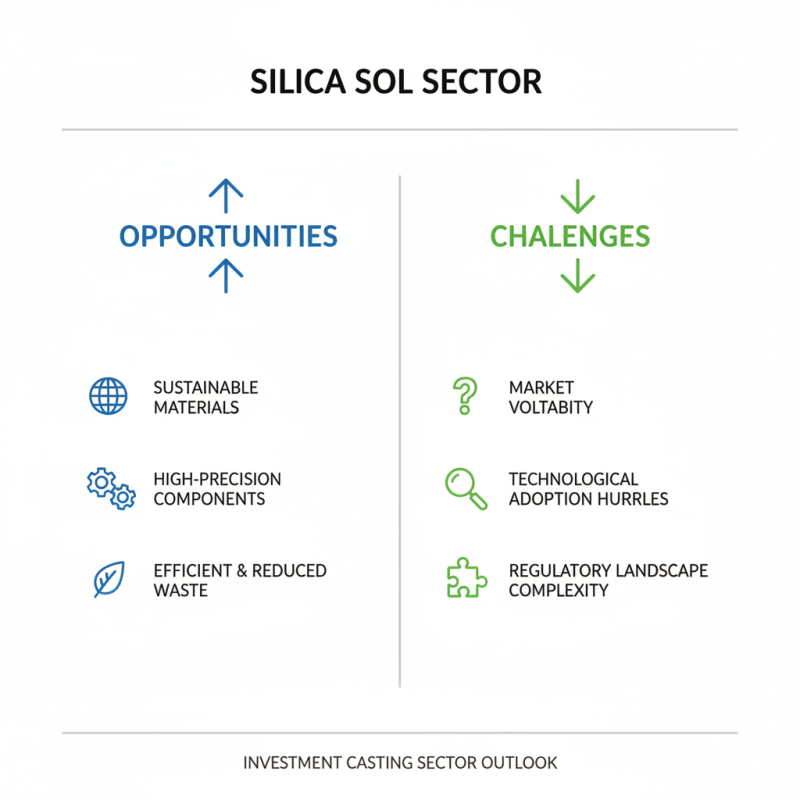
As global interest in sustainable materials grows, the silica sol investment casting sector presents unique opportunities. This technology enables the production of high-precision components, appealing to various industries. The casting process is efficient and reduces waste, aligning with eco-friendly objectives. However, several challenges exist.
One major challenge is the high cost of silica sol materials. These materials can significantly increase overall production expenses. For smaller companies, this might deter entry into the market. Additionally, the complexity involved in the casting process requires specialized knowledge and training. Not every manufacturer is equipped to handle these requirements.
Market fluctuations also pose risks. Prices of raw materials can change unexpectedly. Companies must remain vigilant and adaptable. Identifying reliable suppliers is crucial. Buyers need to engage in thorough research to mitigate these challenges. Exploring partnerships could lead to beneficial insights. A collaborative approach may unlock potential while addressing skill gaps in the workforce.