Leave Your Message
Choosing a supplier for Soluble Wax Investment Casting is not a simple price check. The process depends on wax chemistry, core dissolution, shell integrity, and repeatable dimensional control. A tiny residue inside a turbine passage can turn a promising sample into scrap. That detail matters.
Market context helps, but it needs careful reading. Grand View Research’s Investment Casting Market Size, Share & Trends Analysis Report estimated the global investment-casting market at USD 17.48 billion in 2022. It projected a 5.5% compound annual growth rate from 2023 to 2030. This covers the broader investment-casting market, not a separately measured soluble-wax segment. The distinction matters. Metallurgist John Campbell, author of Complete Casting Handbook, writes, “The quality of a casting is determined by the quality of the liquid metal.” His observation applies broadly, but it reminds buyers that wax performance cannot compensate for weak process control.
This Top 10 supplier guide compares documented capabilities rather than accepting marketing claims as proof. It will assess soluble-core design, wax removal, alloy range, inspection methods, certification evidence, lead times, and technical support. Buyers should request trial parts, dissolution data, and cross-sections of critical channels. Ask for specifics. Rankings have limits: public evidence varies, and some process data remain confidential. A supplier with fewer published details may still perform well; that possibility deserves scrutiny. Treat this list as a shortlist, then verify claims against drawings, sample castings, and a technical review. The best partner is the one whose process fits the geometry, alloy, and production volume—not the one with the loudest brochure.
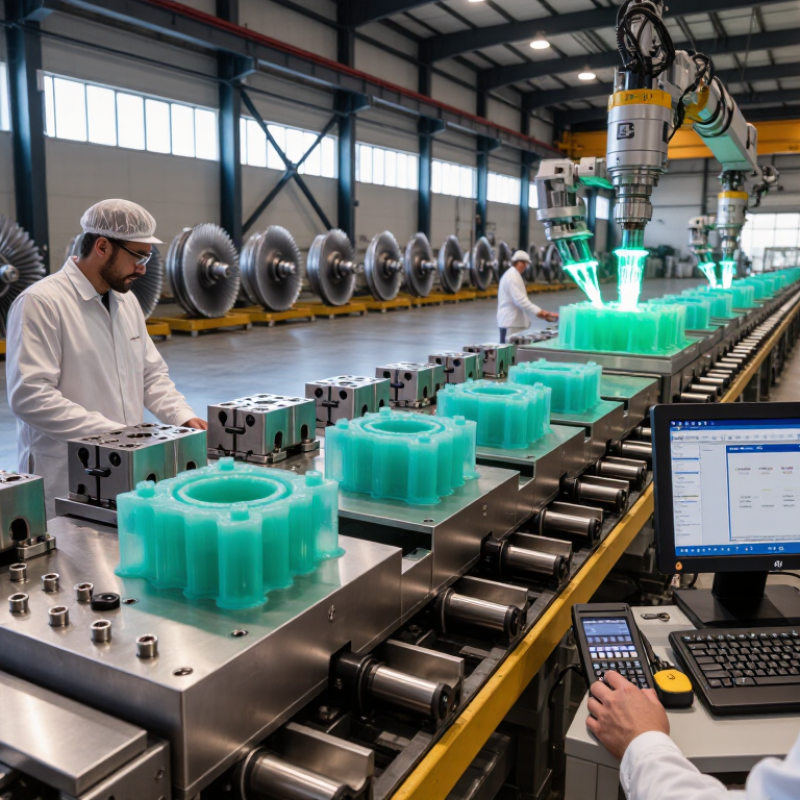
Soluble-wax cores are temporary inserts used to form internal passages that ordinary tooling cannot reach. A core sits inside the pattern die, and molten pattern wax flows around it. Once the wax has cooled, water or another compatible medium dissolves the core, leaving a hollow wax pattern. That pattern is then coated with ceramic slurry to create the mold.
The benefit is geometric freedom. A turbine blade, for example, may need narrow, curved cooling channels that are difficult to machine after casting. A soluble core can shape those channels before the ceramic shell is made. The core must hold its shape during wax injection, yet dissolve without leaving residue. Small differences in core position can shift a passage wall. That gap matters.
Grand View Research’s investment-casting market report estimated the global market at USD 17.2 billion in 2023, with projected growth through 2030. This is broad market context, not evidence that soluble cores are used in every application. When evaluating suppliers, buyers should request data on core dimensions, dissolution time, residue checks, and trial results for the actual wax and geometry. A neat sample is not enough. Process details matter. The difficult part is often repeatability, and specifications alone may not reveal it.
A soluble-wax core is a temporary pattern component used to form an internal passage or cavity in a wax assembly. After the ceramic shell is made and the wax pattern is removed, the core is dissolved or flushed out using a compatible process. The entries below are supplier-selection capabilities, not a ranked list of named companies.
| # | Supplier Capability to Assess | What to Verify | Role in Investment Casting |
|---|---|---|---|
| 1 | Core design and engineering support | Ability to review passage geometry, core support, draft, and removal access with the foundry. | Helps ensure the core forms the intended internal feature and can be removed after casting. |
| 2 | Soluble core material selection | Documented material composition, dissolution medium, and compatibility with the specified wax and process temperatures. | The core must remain intact during pattern assembly and shell building, then be removable by the intended method. |
| 3 | Complex geometry capability | Examples of thin walls, curved passages, branches, and other geometry relevant to the part design. | Enables internal features that may be difficult to create with a simple solid wax pattern. |
| 4 | Dimensional control | Inspection results and stated tolerances for the specific core drawing; confirm measurement methods for critical features. | Core dimensions influence the location and size of the casting’s internal passages. |
| 5 | Wax and assembly compatibility | Trial results for core handling, joining, and contact with the selected pattern wax. | Compatibility reduces the risk of core damage or pattern distortion during assembly. |
| 6 | Ceramic shell process compatibility | Evidence from trials using the intended slurry, stucco, drying conditions, and shell-building sequence. | The core must tolerate shell making without unacceptable softening, swelling, or deformation. |
| 7 | Core removal and residue control | A defined removal procedure, including the dissolution or flushing medium, access requirements, and residue inspection. | Complete removal is important to leave the designed cavity open and minimize contamination. |
| 8 | Surface quality and feature detail | Representative sample inspection against the required surface and internal-feature specifications. | Core surface condition can affect the surface of the cavity formed in the casting. |
| 9 | Repeatability and production controls | Lot identification, process monitoring, nonconformance handling, and records for repeat orders. | Consistent cores support more predictable assembly and casting results across production batches. |
| 10 | Technical documentation and validation | Material and handling data, inspection records, trial plans, and agreed acceptance criteria. | Provides traceable evidence that the core is suitable for the part and the foundry’s process. |